What Fannie Mae predicts for 2024
Fannie Mae economists suggest home sales will remain resilient amid anticipated dips in both home loan volume and consumer spending.

© 2026 Arizent. All rights reserved.

Fannie Mae economists suggest home sales will remain resilient amid anticipated dips in both home loan volume and consumer spending.
The government-sponsored enterprise financed 955,000 mortgages last year, down from the 1.8 million loans it backed in 2022.
But Fannie Mae and Freddie Mac conducted no private-market sales of nonperforming loans early last year as adjustments were made to the program.

The mortgages are part of a program that received congressional scrutiny earlier this year.

The government-sponsored enterprises have consistently earmarked some distressed loans for community, nonprofit and minority investors. Certain Democrats want more.

Industry executives coming off a tough year are wondering what the transition will cost and how many borrowers it'll bring in.

A vast majority of the pool, 86.35%, consists of primary homes. Investment properties and secondary homes, meanwhile, account for 11.29% and 2.36% of the collateral.

Over one-third of the struggling borrowers who received recast loan terms in the first quarter cut their monthly obligation by 20% or more.
Fee hikes at the government-sponsored enterprises are one remedy, the government-sponsored enterprise's regulator noted in its annual report to Congress.
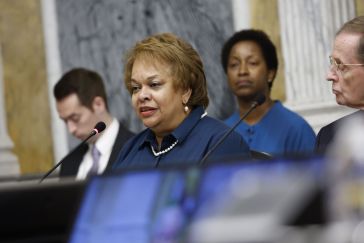
During her opening remarks before lawmakers Tuesday, the head of the Federal Housing Finance Agency reiterated that borrowers with strong credit profiles are not being penalized to benefit those with poorer scores.
The legislative proposals backed by Republican members of congress seek to undo the latest cross-subsidized adjustments to loan fees that two large government-related mortgage investors charge.

Foreclosure prevention actions overall fell for the sixth time in seven months in October, according to the FHFA.
The Federal Housing Finance Agency got an earful from housing experts at a listening session intended to aid a comprehensive review of the financing system.
Chryssa Halley, who has been with the company since 2006, was named CFO and Jim Holmberg was named controller.

While the hot market’s actual and forecast home price gains were key drivers of Fannie’s results, they also present a challenge to the affordable housing mission that it’s working to address.
A hike in guarantee fees charged to lenders for the companies’ backing of loans was due to expire this year, but lawmakers now want to extend it to raise $21 billion for the bipartisan package.

The guarantor has for the first time proposed a risk-based capital requirement for companies not subject to other federal regulation. The industry says the plan, which would impose a heavy charge for servicing portfolios, could drive lenders away from government-backed programs.
The agency’s new chief said eliminating the “adverse market fee” — in place since December — will make it easier for families to refinance while mortgage rates are still low.

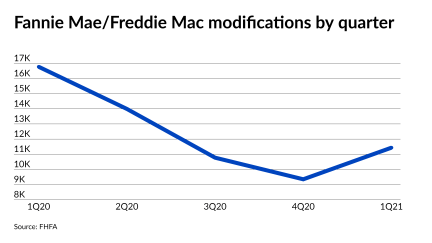
The return of more normalized numbers for two key players in the home loan market could be the lead-up to a wave that’s been anticipated since the coronavirus arrived.
The change makes it easier for borrowers exiting forbearance to get access to home retention options that might otherwise be out of reach due to skyrocketing home prices.
Couldn’t load more articles. Try again.