Takeaways from Trump budget: CFPB reform, FHA fees and student loans

Published Updated 1 Min Read

WASHINGTON — The Trump administration is seeking to add three regulatory bodies created in the aftermath of the crisis to the congressional appropriations process.

As part of the president’s proposed 2020 budget released, the Consumer Financial Protection Bureau, Financial Stability Oversight Council and Office of Financial Research — which now set their funding levels independently — would have to go to Congress every year with a budget request.

The budget, which is more of a policy document than an accurate picture of funding levels, would also charge a fee to lenders issuing Federal Housing Administration-backed loans to help offset the cost of technology upgrades at the FHA, and force colleges and universities to share the government’s risk in backing student loans.

Here are takeaways from the budget for financial services providers:

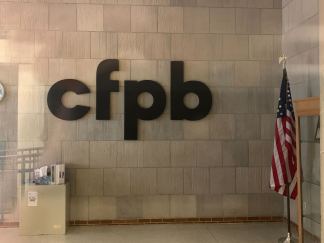
CFPB headquarters

Congressional appropriations for CFPB, FSOC and OFR

The president’s budget proposes subjecting the Consumer Financial Protection Bureau to the appropriations process.

The Dodd-Frank Act created the CFPB as an independent bureau of the Federal Reserve and established that it would be funded primarily through transfers from the Fed.

Republican lawmakers have sought to reform the CFPB’s funding every year since the bureau was created, in 2011, by proposing to add the agency to congressional appropriations. The president’s budget proposes much of the same. Yet it is unlikely that Congress — particularly the Democratic-controlled House — would enact such a measure.

“The Budget proposes legislation to restructure the CFPB. Restructuring is required to ensure appropriate congressional oversight and to refocus CFPB's efforts on enforcing the law,” the budget stated. “The Budget proposes to limit CFPB's mandatory funding in 2019 to allow for an efficient transition period and bring a newly streamlined agency into the regular discretionary appropriations process beginning in 2020.”

Still, it appears that the president’s budget for the CFPB is far more generous than the budget released in February by CFPB Director Kathy Kraninger. Trump’s budget calls $636 million in funding this year, compared with $533 million estimated by Kraninger.

Kraninger, a Trump appointee who has been in the job for two months, plans to slash the CFPB’s budget by roughly 4% this year and 9% in 2020.

The White House is also calling on Congress to establish funding levels for the Treasury Department’s Financial Stability Oversight Council and Office of Financial Research, which currently set their own budget levels.

Both entities have been funded through assessments on certain bank holding companies with total consolidated assets of $50 billion or more and nonbank financial companies supervised by the Federal Reserve.

“OFR and FSOC, established by the Dodd-Frank Act, are currently able to set their own budgets, which circumvents congressional approval and oversight,” the budget says. “Bringing OFR and FSOC into the congressional appropriations process is consistent with recommendations made in Treasury’s June 2017 report to the President on banks and credit unions.”

The budget acknowledges that the Office of Financial Research has already taken steps to further the goals of the 2017 Treasury report through a reorganization that has resulted in “significant reductions” in staffing and operational expenses.

Homes for sale

FHA lender fee to fund IT improvements

The administration’s proposed budget calls for funding technology improvements at the Federal Housing Administration.

The 2020 budget includes authority of up to $400 billion for guaranteeing single-family loans, and up to $30 billion for multifamily and other loan programs. But the budget highlighted funding assistance to “support the modernization of single-family information technology (IT) systems.”

“This investment will enable FHA to address operational and financial risks posed by aging systems, become a more reliable partner for lenders and, by extension, better serve borrowers,” the budget said.

A transfer of up to $20 million would be authorized to an “IT Fund,” and the budget requests the authority to charge lenders a Single-Family Housing IT Fee to offset the investment. The fee would be capped at $25 per loan and expire after four years.

“These additional collections will offset the cost of modernizing FHA’s aging IT systems,” the budget said.

Students throw their mortar boards into the air in celebration during graduation.

Risk-sharing with colleges and university on student loan losses

The White House is calling on colleges and universities to share a portion of the losses on defaulting student loans backed by the government.

“Investing in higher education generally provides strong value for students and taxpayers,” the budget says. “However, some postsecondary programs fail to deliver a quality education that enables students to repay Federal student loans — leaving borrowers and taxpayers holding the bill.”

Jaret Seiberg, an analysts at Cowen Washington Research Group, noted that some conservative lawmakers have advocated for greater college accountability in order to give colleges incentives to limit tuition increases.

“We don't dismiss this idea entirely as Democrats are equally frustrated with tuition hikes and student loan debt,” Seiberg said. “That said, this is such a politically charged space that it is tough to see how this could pass without igniting the broader fight over subsidized tuition.”

Treasury Department building in Washington D.C.

More funding to combat cyber and cryptocurrency threats

The White House is requesting $125 million for the Financial Crimes Enforcement Network to administer the Bank Secrecy Act and focus on the prevention of terrorist financing, money laundering and other financial crimes.

“These resources would expand FinCEN’s special measures enforcement activities and enhance its efforts to combat cybercrime and cryptocurrency threats,” the budget says.

The budget also seeks $18 million to protect the Treasury Department’s information technology systems to help combat such threats.

“The U.S. financial services sector faces a range of cybersecurity vulnerabilities and physical hazards,” the budget says. “The Nation’s adversaries have grown in technical capability, and their attacks have increased in sophistication.”

Dinwiddle Street in the Hill District neighbor of Pittsburgh.

White House repeats calls to do away with CDFI

The 2020 budget proposal would eliminate funding for the Community Development Financial Institutions Fund discretionary grants and direct loan programs, a call the administration made in both 2019 and 2018.

The program was meant to encourage financial investment in low- and moderate-income neighborhoods that are otherwise underserved by traditional banks.

“More than two decades ago, the CDFI Fund was created to jumpstart an industry at a time when CDFIs had limited access to private capital,” the budget says. “The industry has now matured and has ready access to the capital needed to extend credit and provide financial services to underserved communities.”

In the past, industry lobbying groups have pushed to maintain the current CDFI funding levels.

Kate Berry
Reporter

Kate Berry has covered the Consumer Financial Protection Bureau for American Banker since 2016. She joined the publication in 2006 covering mortgage lending and the financial crisis. Berry also has … Read full bio

Neil Haggerty
Reporter

Neil Haggerty was formerly the Congress reporter for American Banker. He previously was a financial regulation reporter at MLex Market Insight.


For reprint and licensing requests for this article, click here.


More From Asset Securitization Report