California bills would pause mortgage payments in disasters
Alongside a bill that gives homeowners a year of forbearance after state-declared emergencies, lawmakers will consider extending wildfire-related moratoriums.

© 2026 Arizent. All rights reserved.

Alongside a bill that gives homeowners a year of forbearance after state-declared emergencies, lawmakers will consider extending wildfire-related moratoriums.
The changing climate is increasing insurance rates for residents and cities and lowering property values in areas that face more frequent and intense disasters.

Offices, apartment buildings and retail locations in Los Angeles face a tangle of difficulties as the smoke clears from January's wildfires. High on the list is inadequate insurance, a common problem in California.

Portfolio enhancements and diversifications cushion the impact of the L.A. wildfires from RMBS losses.

With resources provided through the Homeowner Assistance Fund, the $1 billion plan will help cover homeowners’ past-due payments and comes after New York unveiled a similar assistance package earlier this month.

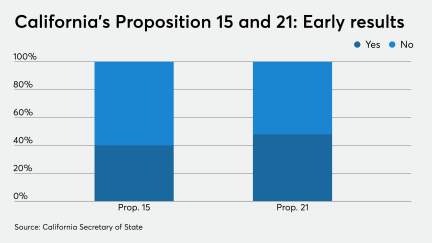
The ballot measure, which would allow local jurisdictions to expand rent control, had concerned mortgage companies who worried the law would result in a patchwork of different policies that could complicate underwriting and discourage lending.
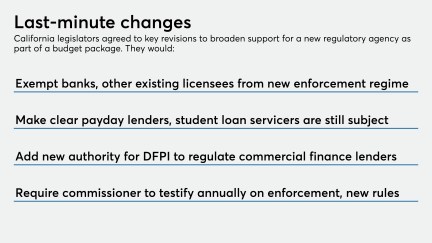
The California plan to create a new, tougher state regulatory agency is at the finish line after lawmakers agreed to key exemptions for banks while maintaining strong enforcement measures for payday lenders and other firms.
The legislation, which would apply to both banks and nonbanks, would give borrowers the right to sue for damages when servicing violations occur.

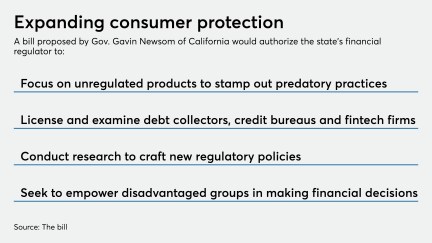
A proposal to expand consumer protections in the state was added to a budget bill after being dropped in June. Financial institutions say the measure conflicts with federal law and are working behind the scenes to stop it.
As COVID-19 infections increase across the country, including in California, Citigroup has structured a residential mortgage-backed securities offering fit for the times, providing investors with a strong deal structure and robust collateral.

A budget item establishing a new agency to protect consumers from predatory lenders has been put on hold as state officials deal with the coronavirus response and other priorities. But it could be revived in legislative talks later this summer.

One criticism of the CARES Act is that it provides relief only to borrowers with government-backed loans. Bills in New York and California would cover the remaining 30% of homeowners.
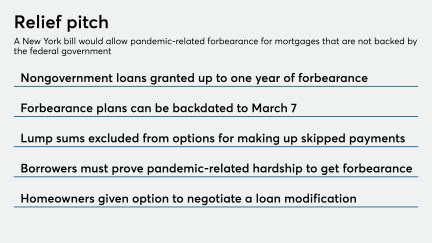
A Democratic measure to freeze foreclosures and auto repossessions through the coronavirus crisis while expanding eligibility for loan forbearance is getting strong pushback from banks and credit unions, which complain it would constrain credit.
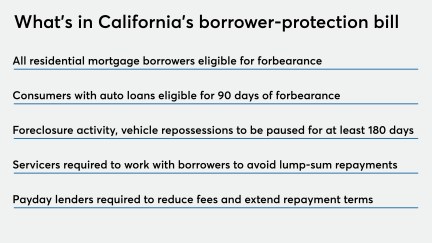
In another sign of state officials trying to outdo the Consumer Financial Protection Bureau, governors in California and New York want greater authority to license and oversee the debt collection industry.
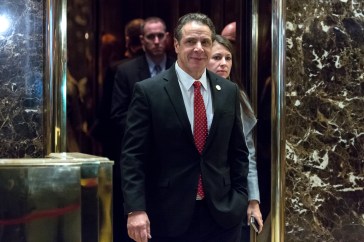
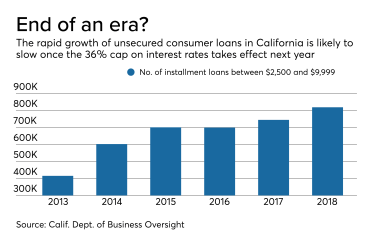
Federal and state policymakers wagged their fingers this week at high-cost lenders that might be looking to team with banks to evade a 36% ceiling on interest rates.
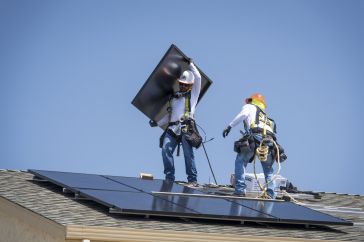
A proposal by a single utility threatens to upend California’s sweeping mandate requiring solar panels on almost every new home.
Seed, a San Francisco startup, has developed a platform that lets small businesses quickly open accounts online. That's an important feature for Cross River as it courts more fintech clients.

The state's financial regulator says Fast Money Loan charged consumers interest rates and fees above the state's usury cap, and operated unlicensed storefronts.
The tricky part: raising awareness without appearing to take advantage of borrowers at a time when agencies like the SBA are out of commission.
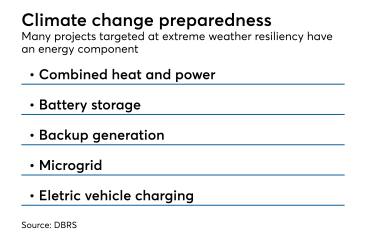
The Property Assessed Clean Energy sector is getting a boost from the expansion of improvements eligible to be financed via tax assessments, including fire resiliency and total building renovations, according to DBRS.
Couldn’t load more articles. Try again.