FHFA extends Fannie and Freddie mortgage payment deferral program
Eligible borrowers can add the forborne payments to the end of their loan term.
© 2026 Arizent. All rights reserved.

Eligible borrowers can add the forborne payments to the end of their loan term.
Rick Thornberry is looking to the lessons from the Great Recession and applying them to current conditions.

Complaints to the bureau hit an all-time high in April. More than one in five said servicers wouldn't grant deferrals, forced borrowers into forbearance or violated other requirements of the coronavirus relief law.
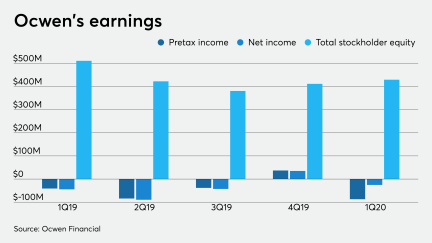
After ending 2019 on a high note, Ocwen Financial posted an income loss in the first quarter due to the unexpected costs and volatility created by COVID-19.
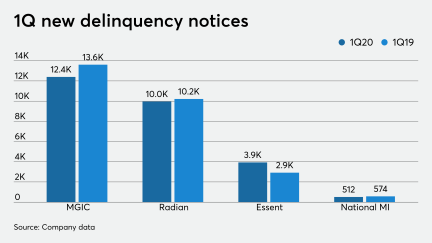
Three of the four had fewer new notices of delinquency for the quarter, but that should change going forward.
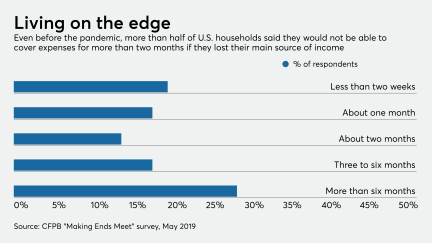
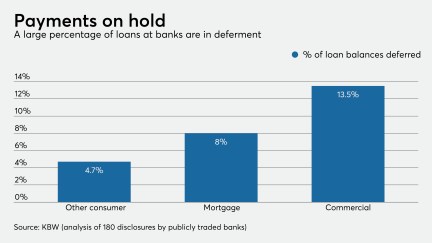
Lenders that scrambled to grant forbearance as the coronavirus pandemic took hold are unsure about the extent of potential losses.
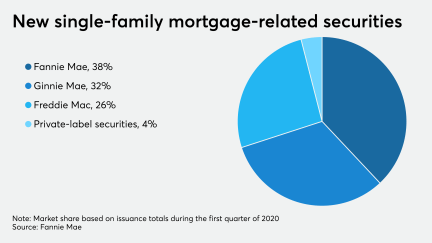
Some benefits are materializing from Fannie Mae's pledge to limit servicers' exposure to principal-and-interest advances the way Freddie Mac does, but counterparties of both GSEs remain exposed to other concerns.
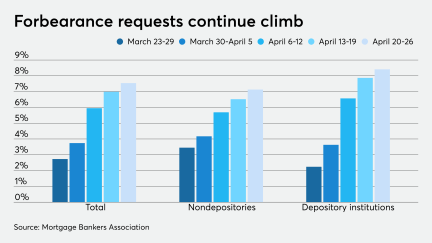
The total coronavirus-related mortgages in forbearance grew by 55 basis points, in lockstep with rising unemployment claims, according to the Mortgage Bankers Association.
Over 236,000 prime and subprime vehicle-loan borrowers received payment deferrals of between 30 and 120 days during the early economic turmoil of the coronavirus pandemic, according to the ratings agency.

About 7.3% of U.S. mortgages entered forbearance plans in April, providing temporary relief to more than 3.8 million borrowers who have lost income during the coronavirus pandemic.

Delinquencies in U.S. commercial mortgage-backed securities jumped in April, with the economy battered by the coronavirus pandemic.

The Consumer Financial Protection Bureau's chief operating officer will take a similar position at the Federal Housing Finance Agency, fulfilling one of the multiple recruiting goals the FHFA announced in January.
The government-sponsored enterprises are focusing on how loans can be repaid after the federal forbearance period ends, and projections for loan modification volumes suggest the larger industry should, too.
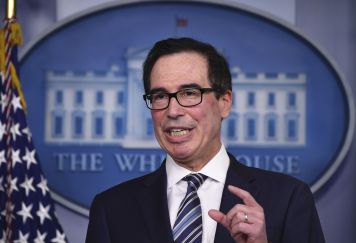
The Treasury secretary said recent government moves will help the firms get through the risk of millions of borrowers missing their loan payments.
The bipartisan coalition of AGs said homeowners should be allowed to wait until the end of a loan term to make payments they skipped because of the coronavirus.
More than a dozen firms have struck agreements with nine states to provide forbearance to customers struggling to make payments in the midst of the coronavirus pandemic.

The agency said it is aligning policies for Fannie Mae- and Freddie Mac-backed loans in forbearance so that servicers are only responsible for advancing four months of missed payments.
Surging unemployment from COVID-19 shutdowns brought a rapidly rising tide of forbearance requests, according to the Mortgage Bankers Association.
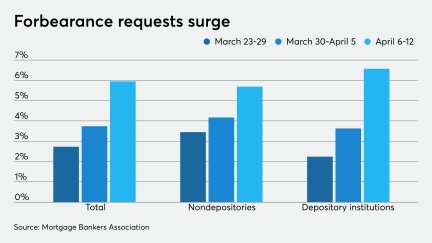
Federal backing for firms facing a deluge of missed mortgage payments is still on the table despite recent comments by an official who questioned the need to help the industry.

The letter written by Rep. Maxine Waters, D-Calif., and Sen. Sherrod Brown, D-Ohio, was seen as a boost to Wall Street lobbying efforts seeking to quell the fallout of the coronavirus crisis on the mortgage market.

Couldn’t load more articles. Try again.