WASHINGTON — President Biden has signed off on the congressional repeal of a regulation designed to ease partnerships between national banks and fintech lenders, a significant win for consumer advocates and state bank authorities.
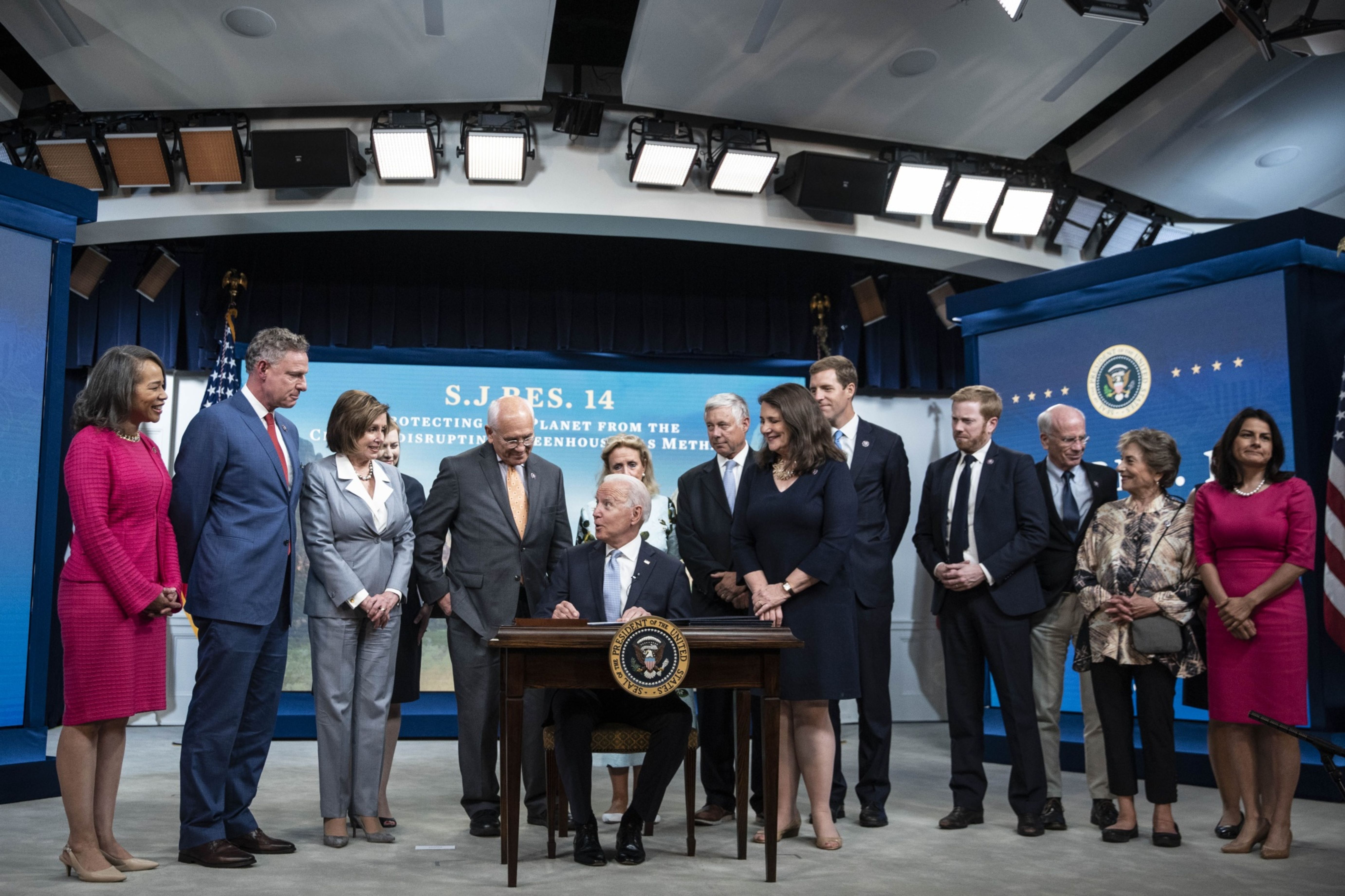
On Wednesday night, Biden signed into law a Congressional Review Act resolution that overturned an Office of the Comptroller of the Currency regulation known as the “true lender” rule. The resolution had light bipartisan support in both the House and Senate, with three Republican senators and one House member voting with their Democratic colleagues.
The OCC’s now-defunct rule introduced a simple test that examiners would use to determine the so-called true lender in bank-nonbank partnerships; if a national bank had funded the loan or was named as the lender in an agreement, the bank would have been considered the true lender.
If a national bank was named the true lender in a fintech partnership, it would have been responsible for ensuring a loan’s compliance with federal law, and a given state’s interest rate caps would not have applied to loan products. Many consumer groups had criticized the rule, arguing such a test would have made it too simple for some predatory lenders to rapidly expand their operations across the U.S.
Before signing the resolution, the president said the measure would help regulators crack down on so-called rent-a-bank schemes.
“In many states, these lenders are kept in check by caps on how much interest they can charge, but some loan sharks and online lenders have figured out how to get around these limits — by using a partnership with a bank to avoid the state cap and charging outrageous interest,” Biden said.
“And I must admit to you, I didn’t know that. I was unaware they could pull that off,” Biden added.
After the House followed the Senate and voted to repeal the rule last week, acting Comptroller Michael Hsu said in a statement that “the OCC will consider policy options, consistent with the Congressional Review Act, that protect consumers while expanding financial inclusion.”