The Federal Housing Administration proposed a change to its Home Equity Conversion Mortgage for Purchase program that could expand its use.
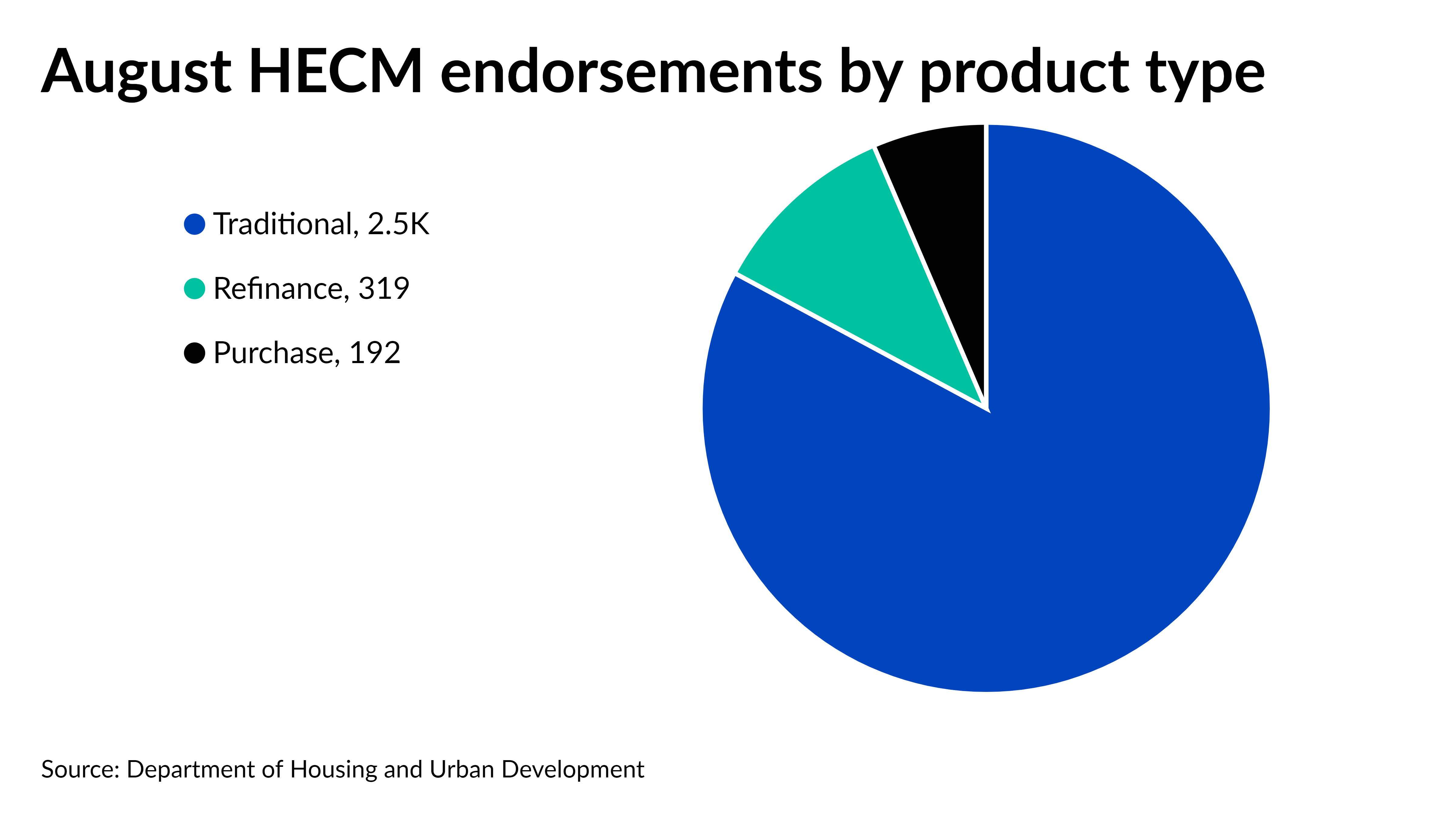
Of the approximate 2,980 HECM endorsements issued in August, purchase was the reason for 192; refinance made up 319 and the traditional program use (taking out an HECM to live on was cited for 2,469, data from the Department of Housing and Urban Development website showed.
If this proposal survives the rulemaking process, the FHA would allow the borrower to use additional funding sources in order to meet their monetary investment requirement to qualify for a HECM for purchase.
“By expanding the list of permitted interested party contributions, FHA is more closely aligning its HECM interested party contribution policies with FHA’s forward mortgage programs,” the agency said in its Federal Register submission.
Most of the current rules around HECM for purchase come from a mortgagee letter issued in 2009 with some changes codified in 2017.
Current rules allow for three sources for the borrower contribution: cash on hand; cash from the sale or liquidation of the borrower’s assets; and HECM proceeds. If this were to go into effect, other permitted sources include premium pricing; gifts; disaster relief grants; and employer assistance.
The rulemaking notice gave the following example: a house in Arizona with a sales price of $491,974, where the borrower’s closing costs are $20,300 and the HECM maximum proceeds of $189,902.
“Under current policy, the total amount of cash due from the borrower at closing to complete this transaction is $322,372 ($491,974 plus $20,300 minus $189,902),” the Federal Register stated. “Under the proposed notice, interested parties could contribute up to 6% of the sales price, or $29,518.44, toward the borrower’s monetary requirements, reducing the total amount due from the borrower at closing from $322,372 to $292,853.56.”
Those contributions can come from the seller, real estate agent, builders, developers, mortgage lenders or their third-party originators as well as “other parties with an interest in the transaction.” The money can come from a combination of those sources, the proposal said.
“The 6% limit may be applied towards but may not exceed the cost of: origination fees; other closing costs paid outside of closing, such as a credit report and appraisal; prepaid items; discount points; interested party payment for permanent and temporary interest rate buydowns; and payment of the initial mortgage insurance premium,” the FHA said.
This proposal has a 30-day comment period that expires on Nov. 24.
Earlier this year, FHA streamlined its claims process for loans insured in the HECM program.