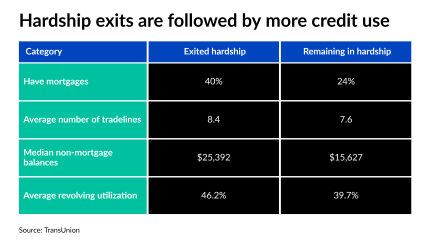
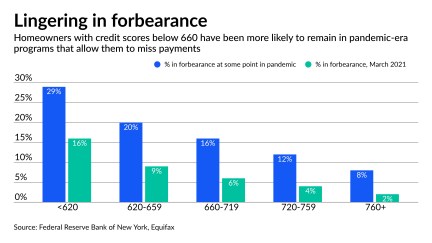
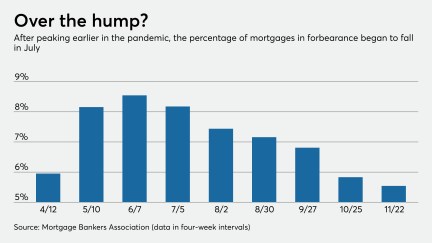
Positive payment behaviors in conjunction with CARES Act measures kept mortgage delinquencies from rising month-over-month, but borrowers facing hardship grew exponentially from last year, according to TransUnion.
The percentage of borrowers over 60 days delinquent inched up to just 1.08% in July from 1.07% in June while falling from 1.41% a year ago. The share of 30-day delinquencies followed a similar path, dropping to 1.81% in July from 1.83% month-over-month and 2.68% year-over-year.
“The moratoriums definitely play a big part in the delinquency numbers, but we’re seeing that even consumers on forbearance are making payments,” Matt Komos, vice president of research and consulting at TransUnion, said in an interview. “Once a consumer enters that kind of accommodation program, their delinquency status cannot get worse. But if they make payments, they can move from past due down to current.”
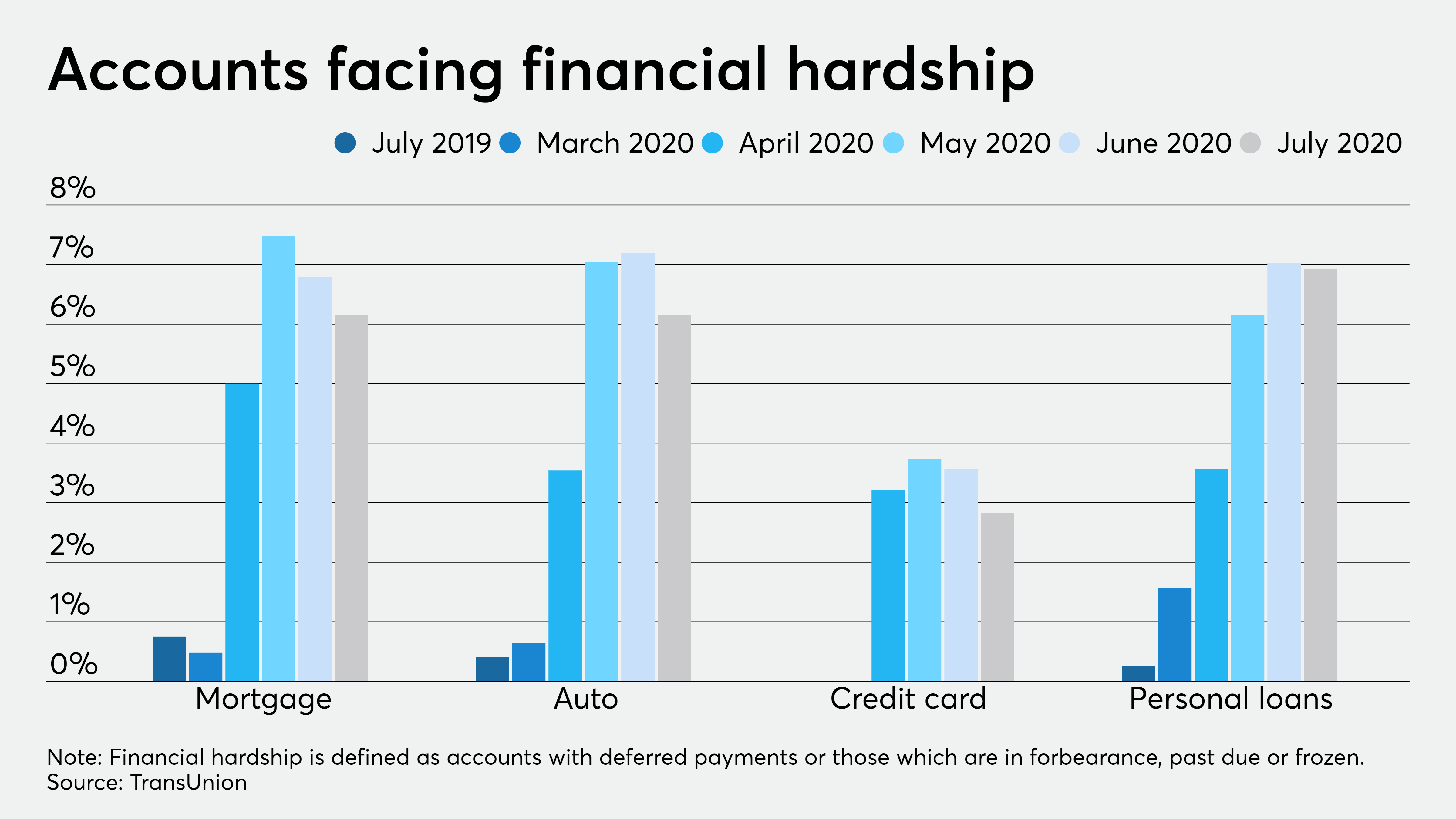
While this mix of pragmatic payment behavior and forbearance coverage keep delinquencies suppressed, loans facing financial hardship — defined as any accounts with a deferred payment, in forbearance, past due or frozen — rose about eight times higher than a year ago.
About 6.15% of mortgages were in hardship status in July, up from 0.75% the year before. Though the coronavirus caused the exponential increase, the percentage came down since peaking at 7.48% in May. That drop falls in line with overall forbearances reaching its highest point through the end of May and beginning of June.
The growth in the number of distressed borrowers going forward depends on further extensions of the CARES Act, including stimulus packages and foreclosure embargoes. Like the COVID-19 crisis overall, the situation remains fluid.
“The end of July was when a lot of the government programs helping consumers expired so they’re left hanging at the moment,” Komos said. “We’re keeping a close eye on this through August and tracking how payment behavior changes once they come out of forbearance to see if any shifts in delinquency start. The next few months will give us a better indication of what direction things might go.”