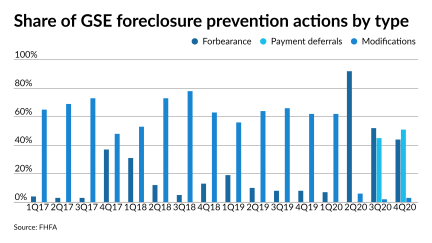
Borrowers with loans in private-label securities are redefaulting at the same high rates as those held by the government-sponsored enterprises Fannie Mae and Freddie Mac.
Redefault rates on 1.2 million first-lien single-family mortgages are running above 50%, according to an internal note sent Wednesday to the company’s salesforce by Sean Dobson, the chairman and chief executive of Amherst Securities Group LP.
Despite attempts to stem the tide of foreclosures with the administration’s Home Affordable Modification Program, which Dobson called “a payment-based experiment on over 1 million loans,” redefault rates are expected to spike in the coming months.
“As we predicted, it [Hamp] did not work,” Dobson wrote. “If we want families to escape foreclosure, a real solution to the second-lien issue must be implemented. Otherwise the Hamp program has only had the effect of loss deferral and exacerbation rather than a more responsible goal of foreclosure avoidance and loss minimization.”
Some industry experts suggest that because it takes so long for many states to work through the backlog of foreclosures, borrowers are choosing to delay the foreclosure process by redefaulting after getting a loan mod.