How tariff uncertainty is taking a toll on banks
The potential for a global trade war has largely undone the optimism that the industry exhibited at the beginning of the year. Here's a look at three ways that tariffs could negatively impact banks.

© 2026 Arizent. All rights reserved.

The potential for a global trade war has largely undone the optimism that the industry exhibited at the beginning of the year. Here's a look at three ways that tariffs could negatively impact banks.
The parent company of Regions Bank released modest growth first-quarter earnings, anticipating a slowdown in the economy due to market volatility.

After rapid changes in U.S. trade policy, banks and their clients are putting merger deals on ice until the dust settles.

As the risk of a recession rises, commercial real estate loans remain a major concern for banks and industry participants. One observer asked: "Is '25 the year where sellers start to capitulate, call a loser a loser, and move on?"

Offices, apartment buildings and retail locations in Los Angeles face a tangle of difficulties as the smoke clears from January's wildfires. High on the list is inadequate insurance, a common problem in California.

The $4 trillion-asset bank posted its highest-ever annual profit but also said its CEO succession plan is still in the works.
The largest U.S. bank by assets has elevated Jennifer Piepszak to chief operating officer, in preparation for Daniel Pinto's retirement in 2026. But Piepszak is not interested in being CEO, the company said.

The financial data firm Intercontinental Exchange is buying the firm that runs the Ameribor interest rate benchmark, which some community and regional banks back as a LIBOR alternative.

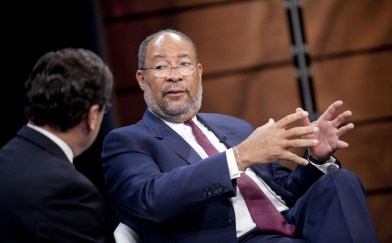
Richard "Dick" Parsons, the former Citigroup chairman who died Thursday, is credited with helping the New York megabank survive the financial crisis. Earlier in his career, he led Dime Savings Bank out of the savings-and-loan crisis.
Lower borrowing costs, reduced exposure to the urban office sector and flattening vacancy rates could collectively save lenders from beleaguered corners of the commercial real estate market.

Treasury yields rose the day after President-elect Donald Trump was picked. The short-term result: It's harder for commercial real estate lenders and borrowers to find common ground.

The added capital will help the New Jersey-based regional bank reduce its commercial real estate footprint faster and give it wiggle room to grow elsewhere, analysts said.
The Dallas-based bank swung to a loss in the third quarter after reclassifying a large bundle of multifamily loans that it plans to offload under a recently announced strategy pivot.

Analysts peppered CEO Jane Fraser with questions about whether Citigroup, already hit hard by its regulators, could face asset growth restrictions. She said there is "absolutely nothing" in the works that could impact the megabank's businesses.
The megabank's scale hasn't made it immune from the deposit wars that have crimped bank profits. But the "stabilization" that Wells Fargo flagged is a positive sign as other banks start reporting earnings.
The megabank reported a big increase in credit costs for the third quarter, which included a reserve build of $1 billion.
Coordinated strikes by dock workers along the Eastern Seaboard and the Gulf Coast could cause issues for banks that provide credit to foreign shipping groups and domestic trucking companies.
As the commercial real estate industry sputters along, lenders, investors and analysts are putting less stock in loan-to-value ratios, a longtime bellwether of risk.
Prophecies about a wave of bank failures caused by sickly CRE loans haven't yet come true. But there are still plenty of caution signs in a saga that will take years to play out.

The Canadian lender's cushion for potential credit losses nearly doubled in the third quarter, while its U.S. business idled.
Couldn’t load more articles. Try again.