What FHFA scandals mean for agency’s future, GSE reform
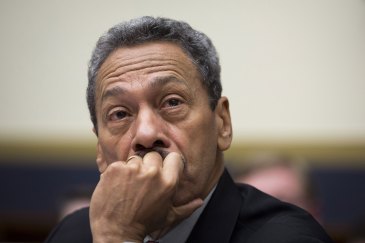
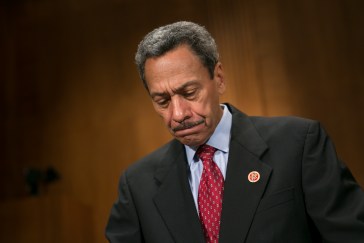
The biggest impact may be to focus the administration’s efforts on selecting a nominee to succeed Director Mel Watt, whose term ends in January.

© 2026 Arizent. All rights reserved.

The biggest impact may be to focus the administration’s efforts on selecting a nominee to succeed Director Mel Watt, whose term ends in January.
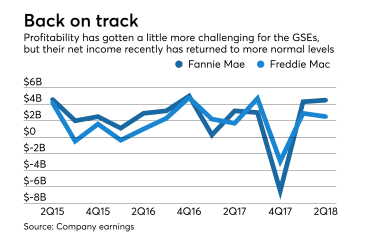
Fannie Mae’s treatment of a reperforming loan package helped drive up earnings by almost 41% to $4.5 billion, delivering a stronger dividend to Treasury ahead of a leadership change.
Whoever succeeds current Director Mel Watt will have a front-and-center role in efforts to reform Fannie Mae and Freddie Mac.
Instead of shrinking the GSEs, the housing regulator is letting them expand into a host of new products and programs.
The groups applauded a proposal to establish minimum GSE capital requirements, but called for more immediate steps to release the companies from conservatorship.
Risk management and technology systems at the Federal Housing Administration lag decades behind Fannie Mae and Freddie Mac and desperately need to be revamped, according to a top official at HUD.

The agency proposed new minimum capital requirements for Fannie Mae and Freddie Mac that would only go into effect if the government ends its conservatorships.
In the continued absence of legislation, Fannie Mae and Freddie Mac’s regulator announced work on a new capital framework.
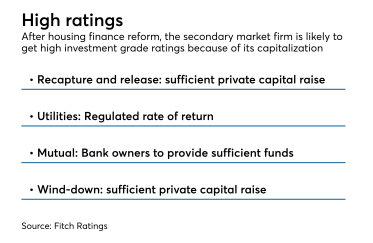
The future secondary mortgage market entities will receive high investment grade ratings, even as there is no clarity on their scope or form, Fitch Ratings said.
Lenders should not get so desperate chasing volume by originating lower credit non-qualified mortgage products that they are inviting the next regulatory crackdown, said David Stevens, the Mortgage Bankers Association's CEO.

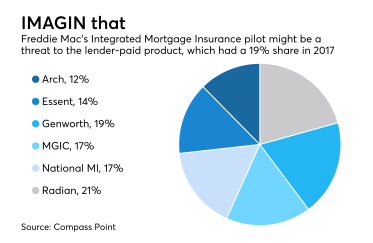
Freddie Mac and Arch Capital are testing a new form of risk-sharing deal to boost investor appetite for low down payment mortgages. But the pilot is raising concerns about "charter creep" because it dictates private mortgage insurance decisions typically made by lenders.
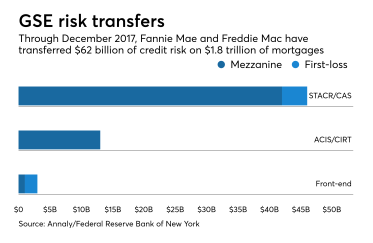
The success of the government-sponsored enterprises' credit risk transfer programs shows that they can be the basis for housing finance reform.
The Supreme Court dealt hedge funds and other big investors a blow Tuesday by refusing to revive core parts of lawsuits that challenged the federal government’s capture of billions of dollars in profits generated by Fannie Mae and Freddie Mac.

Despite a legislative push by some senators and other stakeholders to jump-start housing finance reform, efforts to form consensus over a bill once again are stuck in neutral.
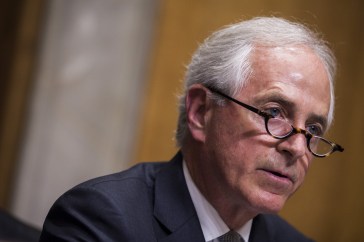
Lenders should be encouraged to hold more credit risk in the mortgage market, rather than having it foisted on Fannie and Freddie.
Housing finance reformers are pushing full steam ahead to get a bill introduced before the political calendar makes passage nearly impossible.
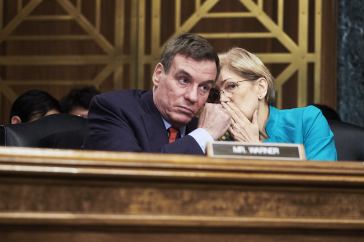
Senate negotiators are working on a bill that would place Fannie Mae and Freddie Mac into receivership and replace them with multiple mortgage guarantors, according to sources.
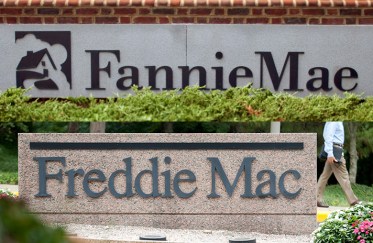
Fannie Mae and Freddie Mac will be allowed to build capital buffers to protect against losses under an agreement between the Treasury Department and the Federal Housing Finance Agency announced on Thursday.
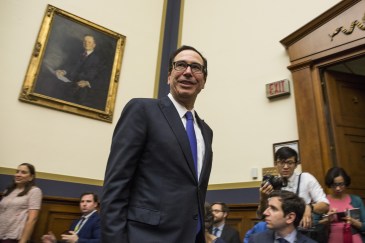
Until recently, there was a consensus among policymakers that Fannie Mae and Freddie Mac needed to be eliminated. That just changed. Here's why.
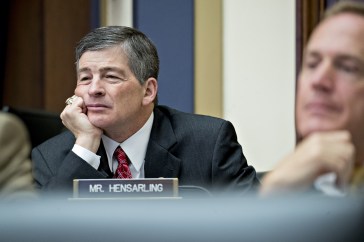
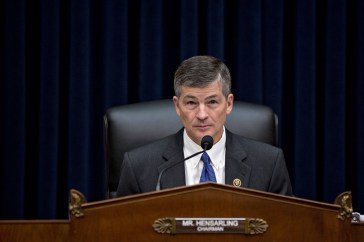
House Financial Services Committee Jeb Hensarling shifted tactics on housing finance reform Wednesday, acknowledging that a bill he’s pushed for years to virtually eliminate the government’s role in the mortgage market lacks the support to become law.
Couldn’t load more articles. Try again.