Upgrade has some skin in its 2nd consumer loan securitization
The online lender founded by Renaud Laplanche contributed half of the collateral for the $226.9 million transaction. It's also retaining a 5% economic interest in the deal.
The installment lender, which bills itself as an alternative to payday lenders, targets underserved communities and operates through a network of retail partners.
GM Financial is front-loading the $1.2 billion deal with early maturities, according to presale reports; Hyundai Capital is also readying a $710 million transaction.
Tier 7 loans, which have lower limits on free cash flow and allow negative personal income, account for 7.26% of the collateral for the online lender's next transaction, according to Kroll.
In a major victory for small-dollar lenders, the agency plans to rescind underwriting requirements that were the centerpiece of the rule drafted by a Democratic appointee.
As the consumer lender announced its seventh consecutive profitable quarter, its CEO bragged that his company is better positioned than the likes of Goldman Sachs and LendingClub.
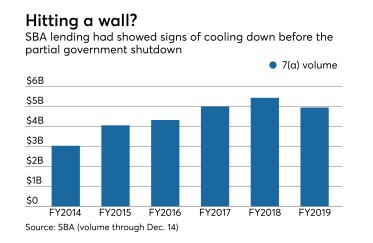
Lenders are glad the agency worked swiftly through a backlog of paperwork, but they're worried funds will get cut off if the government closes again.
The remainder of the collateral was contributed by Goldman Sachs, which is also holding onto 5% of the risk in the deal to comply with risk retention rules.
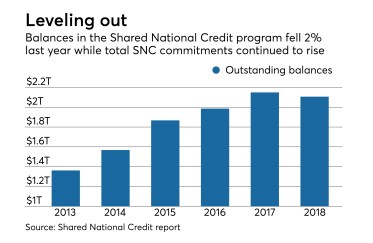
Despite a generally positive picture in the Shared National Credit report, regulators warned that underperforming loans in the portfolio remain elevated.
Federal regulators should consider applying guidance that is nearly two decades old to end uncertainty about the legality of particular bank partnerships.
Some in the industry worry the Fed may balk at allowing OCC charter recipients into the payments system, but Otting downplayed those concerns.
The tricky part: raising awareness without appearing to take advantage of borrowers at a time when agencies like the SBA are out of commission.
This year saw elation over the rollback of risk retention for CLOs give way to concerns about leveraged lending, the 1st post-crisis downgrade of a subprime auto deal, the 1st AAA for commercial PACE, and much, much more.
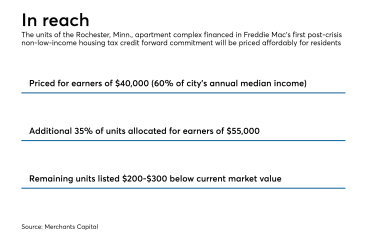
Freddie Mac issued its first non-low-income housing tax credit forward commitment, providing financing for an affordable housing development in Minnesota.
The state has expanded the scope of ongoing legal actions against Avant and Marlette to include several securitization trusts and trustees.
The online lender will roll out the business early next year with a focus on loans of less than $100,000.
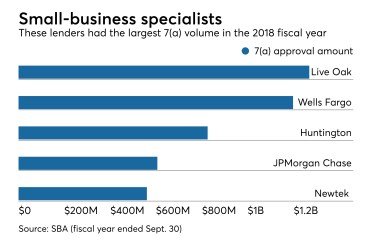
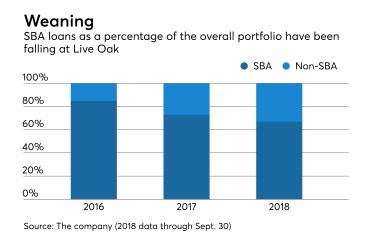
Live Oak Bancshares became an SBA juggernaut by making loans, selling them and making more. With economic conditions changing, it is retaining more credits.
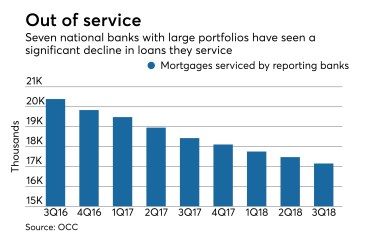
An agency report said servicing portfolios have shrunk by nearly half in 10 years as much of the mortgage market has shifted to nonbanks.
The electric car maker was able to offer less credit enhancement on the senior tranche of notes to be issued because residual value accounts for less of the collateral than its prior deal.
The transaction has a senior-note tranche with a double-A rating from DBRs, and is being arranged by Banco Santander.
Couldn’t load more articles. Try again.