CFPB poised to reinstate tough stance on payday lenders
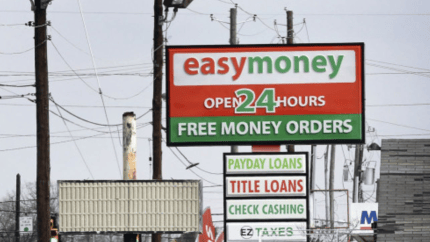
A recent statement by acting Director Dave Uejio is the clearest signal that the agency plans to revive strong underwriting standards that the Trump administration eliminated.
© 2026 Arizent. All rights reserved.

A recent statement by acting Director Dave Uejio is the clearest signal that the agency plans to revive strong underwriting standards that the Trump administration eliminated.
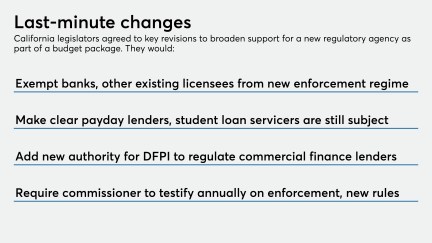
The California plan to create a new, tougher state regulatory agency is at the finish line after lawmakers agreed to key exemptions for banks while maintaining strong enforcement measures for payday lenders and other firms.
The agency sought to provide certainty that most actions from the past eight years remain in effect despite the ruling that the bureau's leadership structure is unconstitutional.
Tom Pahl, a former longtime regulator at the Federal Trade Commission, has led key rulemaking efforts for the consumer bureau.
The congressional showdown over the pace of rulemaking during the pandemic is a hardening of older positions on banking policy ahead of the 2020 elections, observers said.
The templates are meant to make it easier to obtain agency approval for small-dollar loan products and to accommodate mortgage servicers that want to provide online loss mitigation options.
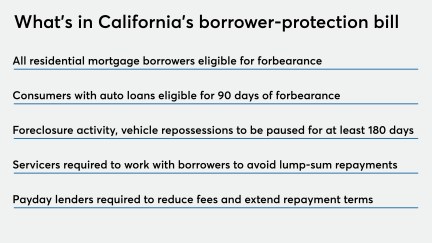
A Democratic measure to freeze foreclosures and auto repossessions through the coronavirus crisis while expanding eligibility for loan forbearance is getting strong pushback from banks and credit unions, which complain it would constrain credit.
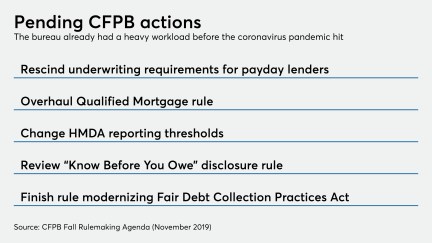
The agency is still moving forward on key regulations dealing with payday lending and mortgage underwriting despite new demands posed by the crisis.
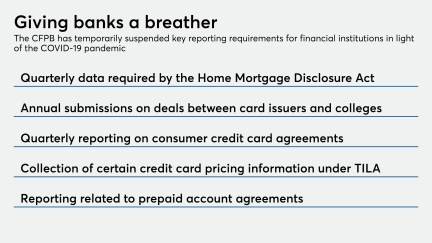
The agency has relaxed some reporting requirements and joined other regulators in encouraging banks to help borrowers, but pressure is building on the bureau to do more to aid consumers suffering financial hardship.
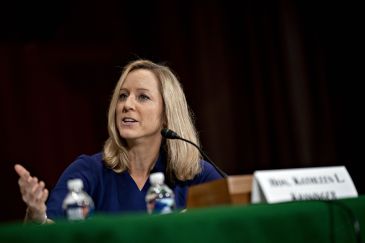
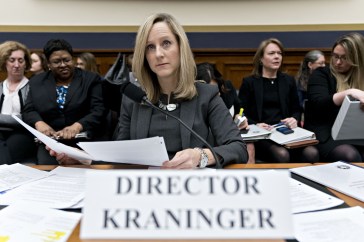
Kathy Kraninger was grilled about whether her agency and others were doing enough to cushion consumers from the economic blow of the coronavirus crisis.
Most states have some kind of pricing limit on consumer loans. But proposals for a national usury law divide even Democrats, some of whom are concerned about restricting credit.
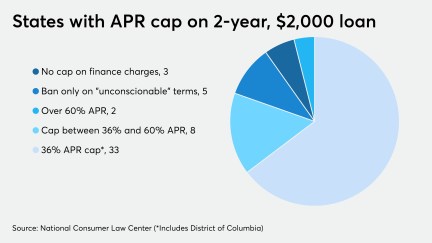
Think Finance, which had teamed with tribal lenders to offer high interest installment loans, could no longer make or collect on loans in states that have caps on interest rates, under terms of a proposed settlement with the Consumer Financial Protection Bureau.
In a letter to the agency's inspector general, the 15 lawmakers pointed to specific cases where they said the bureau departed from legal standards in deciding not to require restitution.
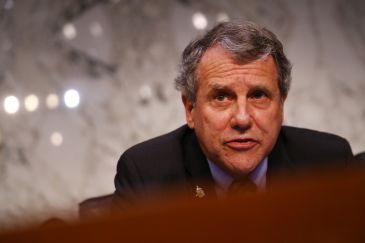
The Consumer Financial Protection Bureau faces a busy policy agenda heading into the new year, as well as strong external forces that are beyond its control.
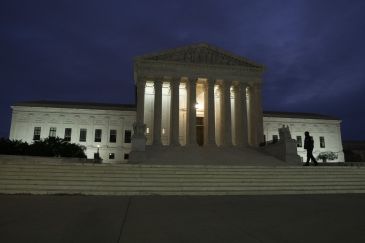
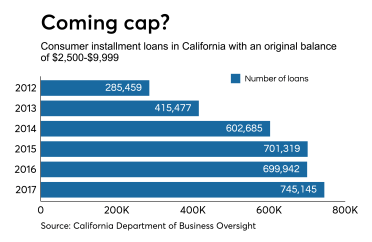
The state has proposed a law to cap the interest rate on certain consumer loans, but nonbanks aim to skirt it by seeking a rent-a-charter.
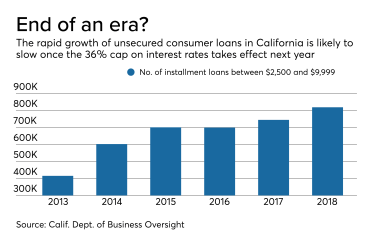
Federal and state policymakers wagged their fingers this week at high-cost lenders that might be looking to team with banks to evade a 36% ceiling on interest rates.
In an update of its rulemaking agenda, the bureau said it "expects to take final action in April 2020" on a proposal that would rescind strong underwriting requirements.
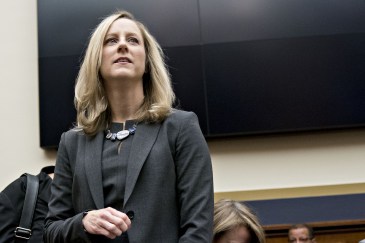
In her second day of congressional testimony, Kathy Kraninger took heat from Senate Democrats for weighing in on constitutional questions about her agency and for her enforcement track record.
CFPB Director Kathy Kraninger faced a barrage of questions from Democrats on the House Financial Services Committee over why the agency has not demanded refunds for consumers in recent settlements.
The legislation, which passed a key test in the state Senate on Wednesday, is the product of a compromise between consumer advocates and some lenders.
Couldn’t load more articles. Try again.