Home equity gains grow in Q4
By the end of December, 63% of borrowers saw home values increase by 7.3%, for a collective gain of $1 trillion, CoreLogic's report found.
© 2026 Arizent. All rights reserved.

By the end of December, 63% of borrowers saw home values increase by 7.3%, for a collective gain of $1 trillion, CoreLogic's report found.
"This is Han Solo in carbonite: This is a market that could stay frozen for quite some time," said Benjamin Keys, a real estate professor at the University of Pennsylvania's Wharton School.
The decline in loan activity and softening prices also helped drive down builder sentiment for the 11th month in a row.
Quarterly numbers also show the smallest gain in appreciation since 2011, with values decreasing on an unadjusted basis, according to Fannie Mae.

Housing's unusually high appreciation rates have now slowed for three months straight, and the number of metropolitan areas that are considered overvalued keeps growing, according to CoreLogic.
Prices are starting to fall in one of the most expensive cities in the U.S. but they are still much higher than their pre-pandemic levels.
Several Sun Belt cities popular for relocation over the last two years were among markets with the most reduced listing prices in April.
A measure of home prices in 20 U.S. cities jumped 18.3%, down from 18.5% in October, the S&P CoreLogic Case-Shiller index showed Tuesday. It marked the fourth straight month that home-price appreciation has cooled off ever so slightly.
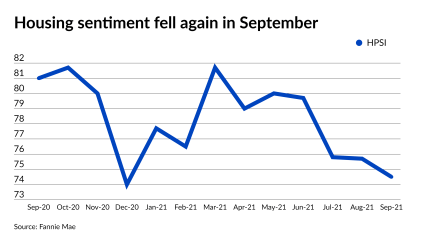
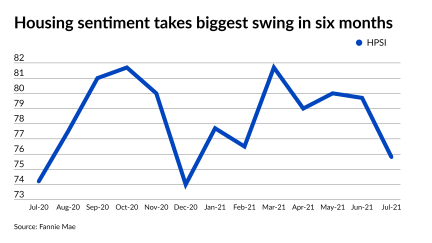
The share of borrowers who thought it was a good time to buy hit an all-time low, according to Fannie Mae.
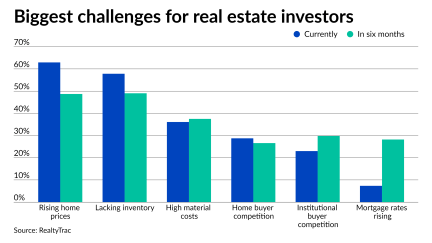
The home price increases and the ongoing inventory shortage made buying conditions difficult and many think it’s only getting more challenging, according to RealtyTrac.
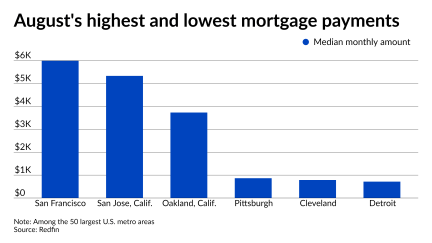
Southwestern housing markets had the largest annual changes in median monthly home loan payments, with one increasing more than 30%, according to Redfin.
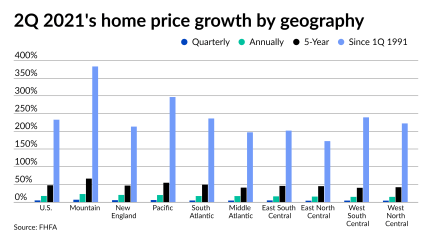
Meanwhile, property values across the U.S. have increased for 40 quarters in a row, according to the Federal Housing Finance Agency.
But average loan sizes remain near record highs, with summer purchases of new constructions continuing to drive up prices.
Tight inventory and heightened competition kept prime purchasers at bay as property values continued their summer surge, according to Fannie Mae.
Concerns about foreclosure and a crowded market led to an increase in listings at lower price points in the second quarter.
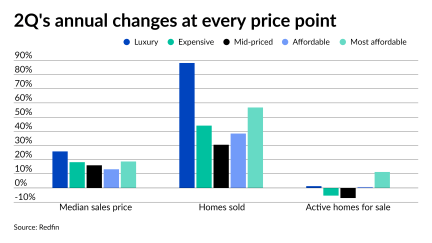
Soaring home prices and the abundance of all-cash offers that the deep-pocketed can afford makes home buying even harder for the average borrower, according to a Redfin report.
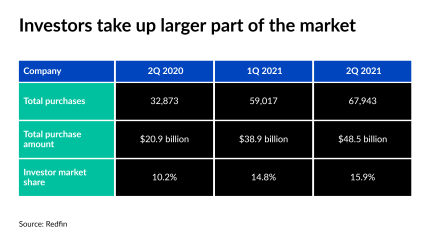
As rising home valuations force first-time home buyers out of the market, expect to see non-owner-occupied loans to increase.

Competition amongst those shopping for homes fell for the second straight month as surging prices pushed consumers to the sidelines and inventory saw modest gains, according to Redfin.
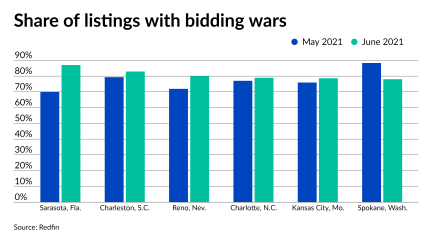
The lack of homes for sale is supporting the record values, unlike what happened in the mid-2000s, analysts say.
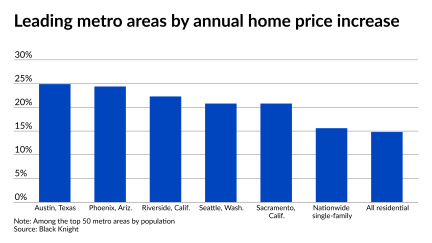
Home prices grew at a record annual pace in April but indicators of a possible slowdown popped up in May, Redfin noted.
Couldn’t load more articles. Try again.