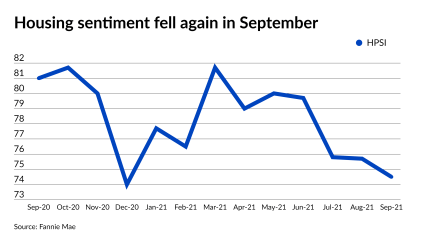
Pessimism about the housing market grew in September
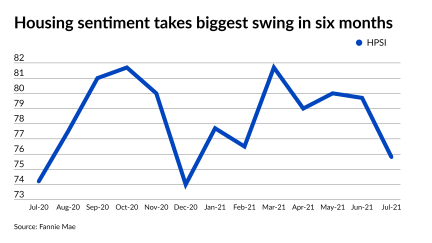
The share of borrowers who thought it was a good time to buy hit an all-time low, according to Fannie Mae.
© 2026 Arizent. All rights reserved.

The share of borrowers who thought it was a good time to buy hit an all-time low, according to Fannie Mae.
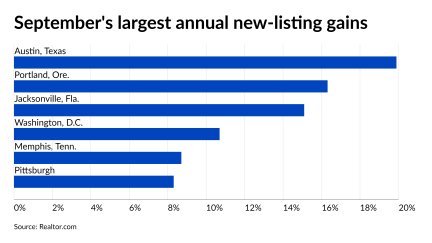
More for-sale homes hit the market than at any point this year but a turning point may lie ahead, according to Realtor.com.
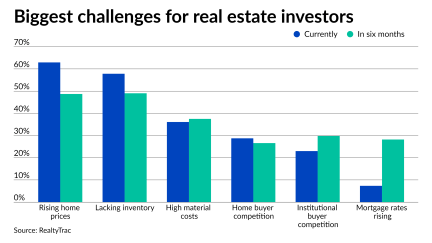
The home price increases and the ongoing inventory shortage made buying conditions difficult and many think it’s only getting more challenging, according to RealtyTrac.
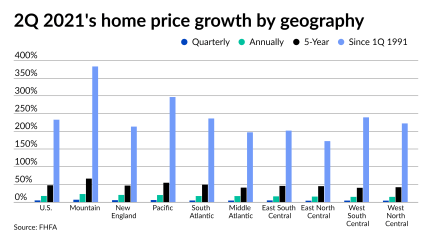
Meanwhile, property values across the U.S. have increased for 40 quarters in a row, according to the Federal Housing Finance Agency.
Tight inventory and heightened competition kept prime purchasers at bay as property values continued their summer surge, according to Fannie Mae.
A ClimateCheck score measures the risk of disaster at the zip-code level over the period of a 30-year mortgage.

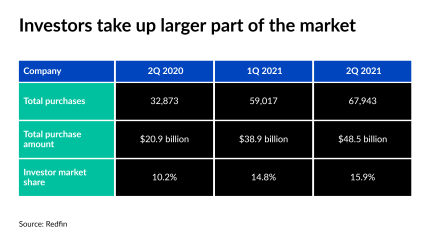
Soaring home prices and the abundance of all-cash offers that the deep-pocketed can afford makes home buying even harder for the average borrower, according to a Redfin report.
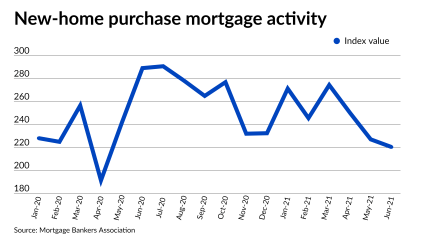
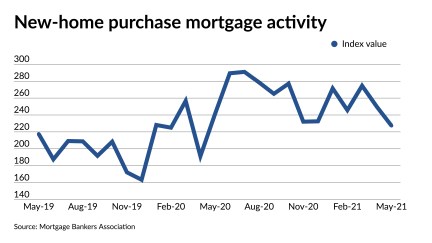
Meanwhile, the average new-home mortgage price climbed to a new all-time high, according to the Mortgage Bankers Association.
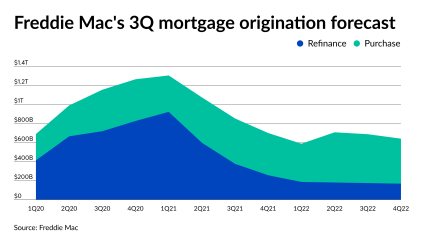
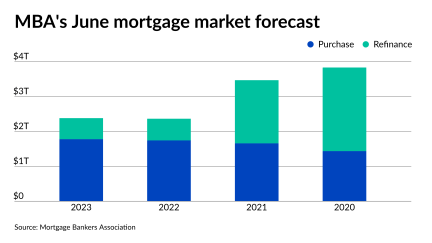
The GSE forecasts $4 trillion in production this year because refinance activity is stronger than expected.
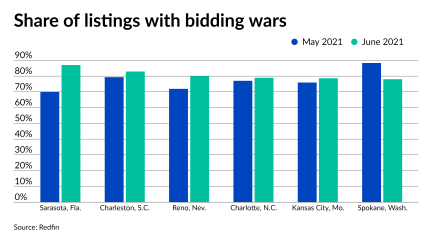
Competition amongst those shopping for homes fell for the second straight month as surging prices pushed consumers to the sidelines and inventory saw modest gains, according to Redfin.
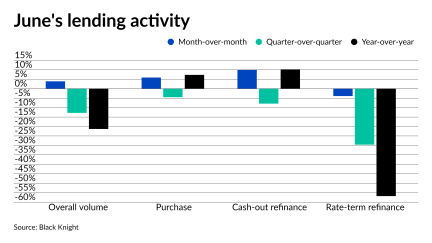
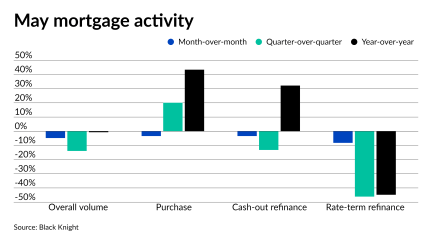
Boosts in purchases and cash-out refinances drove the summer turnaround, according to Black Knight.
The lack of homes for sale is supporting the record values, unlike what happened in the mid-2000s, analysts say.
Demand was strongest at the high end of the market, which pushed loan amounts up for the fourth straight month.
Changed borrower psychology and the severe housing inventory shortage dropped lending activity across the board, according to Black Knight.
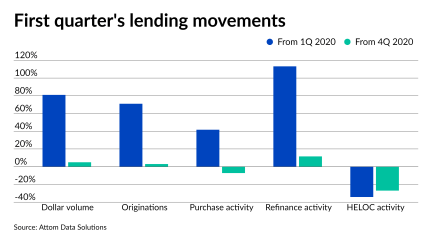
Refinancings more than doubled the year-ago amount and made up for the slowed purchase activity, according to Attom Data Solutions.
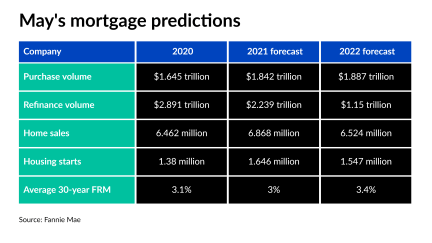
Economic recovery should soar into the summer as vaccination rates climb and restrictions loosen up, but low inventory is likely to limit mortgage activity into the next year, according to Fannie Mae.
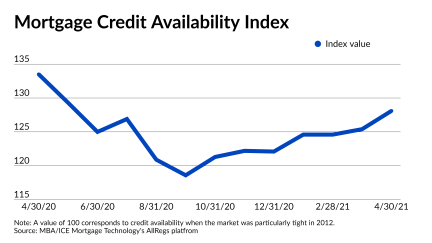
It’s getting easier to close bigger loans for higher-priced properties, but credit is expanding slower for first-time buyers.
Rising cases and vaccine issues caused bond yields to fall, but inflationary pressures will likely reverse that course.
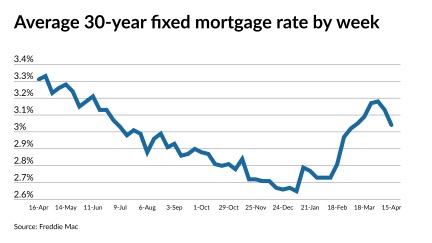
Mortgage rates that are rising in tandem with a recovering economy dampened borrower activity, even with prime homebuying season underway.
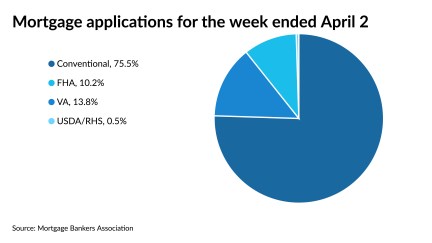
While the economic recovery and stimulus checks drove upward movement in purchases, it wasn’t enough to offset tumbling refinance activity.
Couldn’t load more articles. Try again.