‘Blue wave’ in Georgia runoffs would change mortgage rate outlook
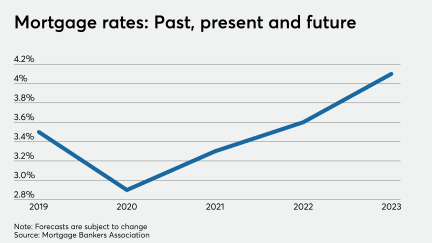
Rates could be 50 basis points steeper than the MBA’s current projections, which anticipate the 30-year mortgage will average 3.3% next year, up from nearly 3% this year.
© 2026 Arizent. All rights reserved.

Rates could be 50 basis points steeper than the MBA’s current projections, which anticipate the 30-year mortgage will average 3.3% next year, up from nearly 3% this year.
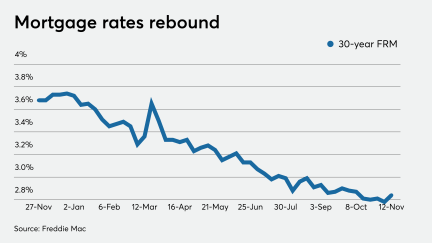
Mortgage rates moved off of their all-time low this week as a result of reports that Pfizer's coronavirus vaccine was potentially 90% effective, according to Freddie Mac.
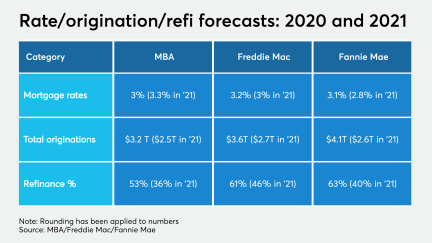
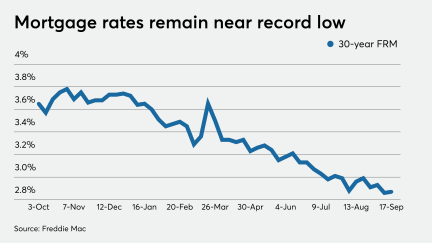
Mortgage rates are currently the lowest in the history of Freddie Mac’s survey, but sharp differences of opinion persist on whether that will make this a $4-trillion year or not.
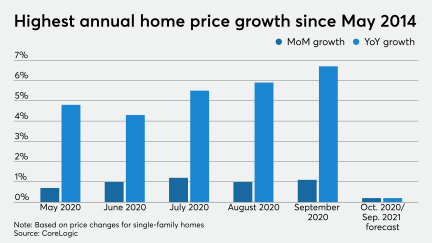
With a dearth of inventory, September generated the largest price growth in the housing market since May 2014, according to CoreLogic.
Mortgage rates fell this week to another record low, and are now over a full percentage point below where they were five years ago, according to Freddie Mac.
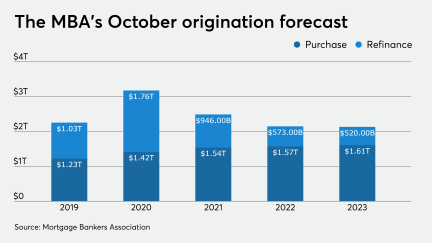
But an expected drop in refinancings as mortgage rates rise should more than cancel that out, resulting in declining overall volume through 2023.
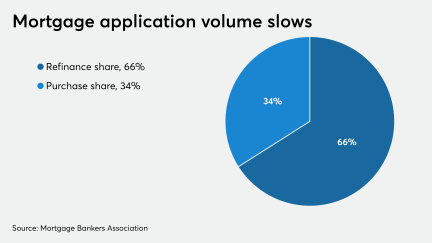
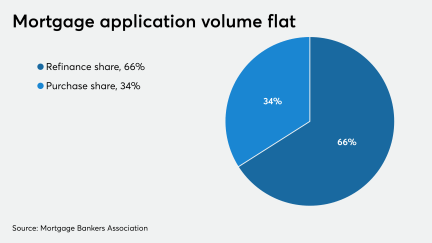
Mortgage applications decreased 0.6% from one week earlier, although a slight drop in purchase volume belied the fact that consumers are taking advantage of the current rate environment, according to the Mortgage Bankers Association.
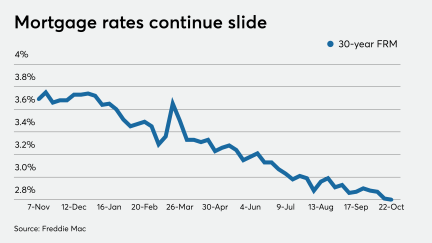
Just a week after commenting that the bottom on mortgage rates was possibly reached, Freddie Mac reported that they fell 6 basis points to another record low.
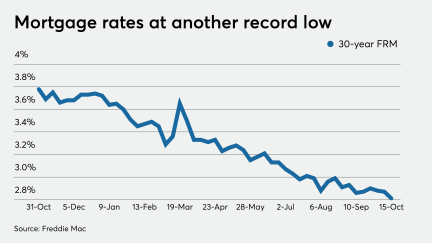
Mortgage applications decreased 0.7% from one week earlier, but lending activity should continue strong for the remainder of the year as rates stay low, according to the Mortgage Bankers Association.
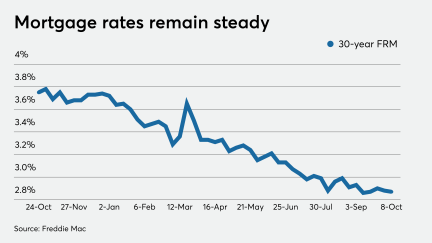
Mortgage rates remained flat this week, a sign that the bottom has possibly been reached, but the housing market looks to remain strong for the near future, according to Freddie Mac.
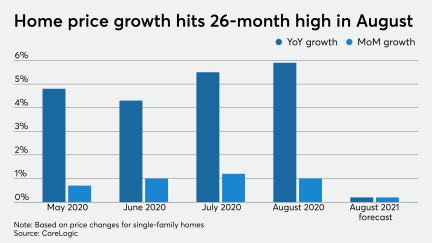
Low mortgage rates and strained supply drove the housing market price growth to a 26-month high in August, according to CoreLogic.
Mortgage rates fell back toward their all-time low this week, increasing purchasing power for homebuyers. But the lack of homes for sale drives up prices and reduces affordability, according to Freddie Mac.
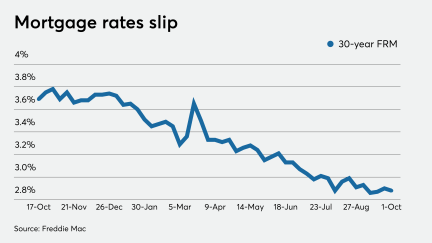
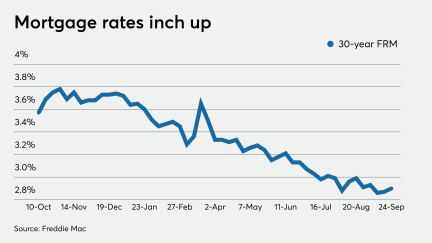
Mortgage rates experienced a marginal uptick this week, rising three basis points. But they remained near record lows and possibly soon could track down again, according to Freddie Mac.
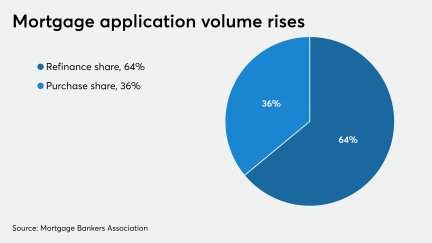
Mortgage applications increased 6.8% from one week earlier as this summer's surprise purchase demand has carried over to the fall, according to the Mortgage Bankers Association.
Home starts fell more than forecast in August, reflecting less construction of apartments and a decline in the tropical storm-hit South, representing a pause in momentum for a housing market that's been a key source of fuel for the economy.

Mortgage rates remained relatively flat, rising a single basis point off of last week's record low, according to Freddie Mac.
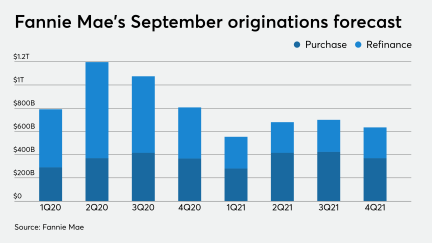
Low rates, along with increased new and existing home sales activity drives the latest forecast.
Also the Federal Housing Administration, which is a key contributor of government-insured loans to Ginnie securitizations, recently set new conditions on mortgage applicants that have been in forbearance.
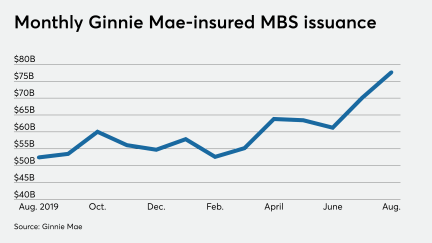
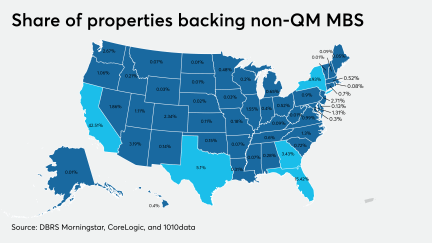
The new reality for investors and originators accounts for forbearances and ability-to-repay.
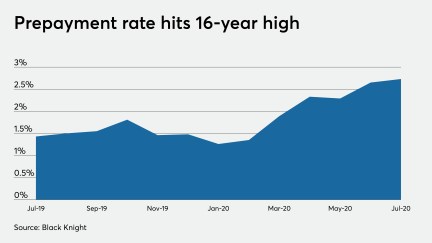
As interest rates tumbled throughout July, prepayments climbed to the highest monthly rate since 2004, but 90-days-or-more delinquencies were on the rise from June, according to Black Knight.
Couldn’t load more articles. Try again.