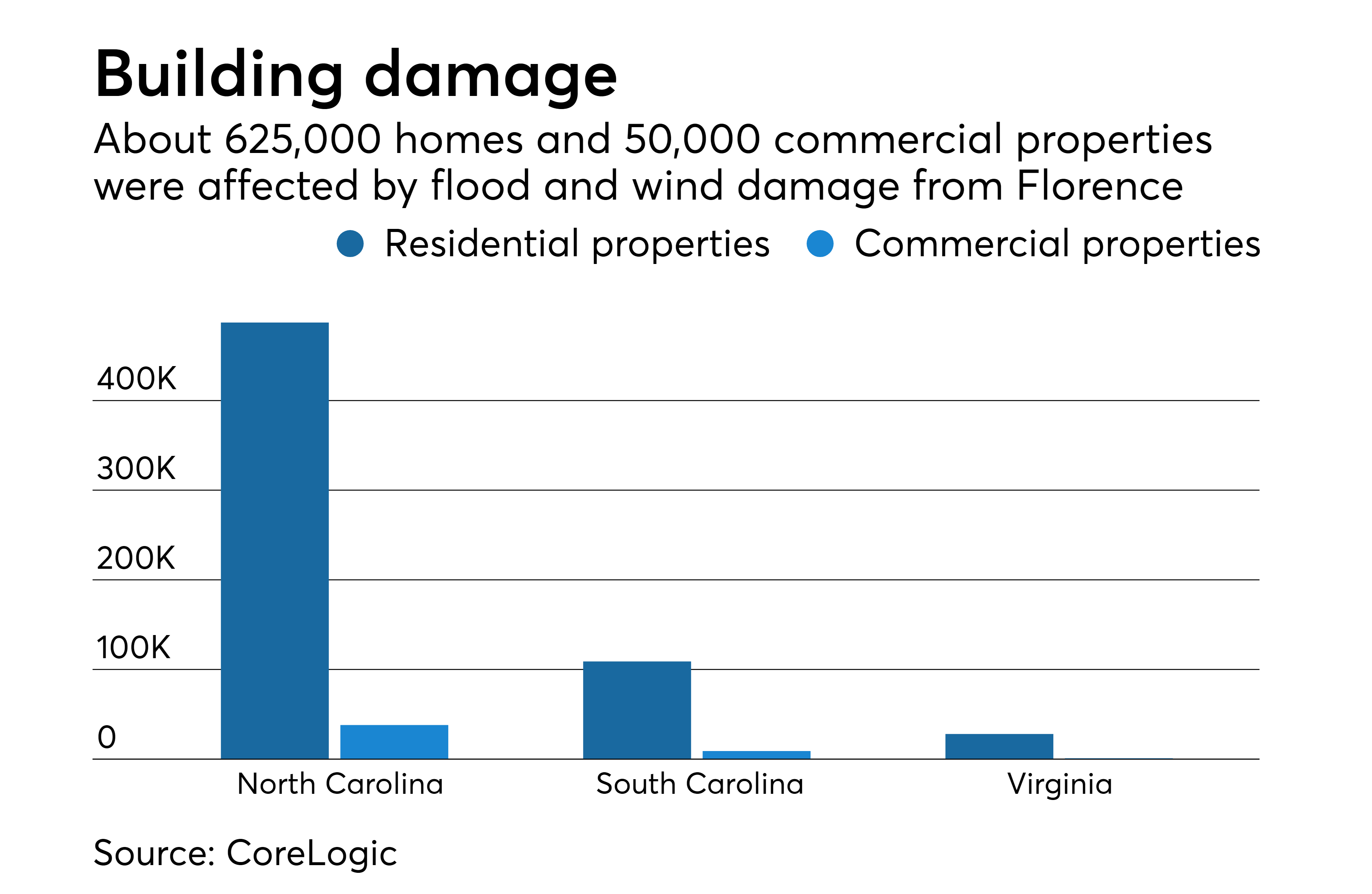
Hurricane Florence’s flooding and wind destruction affected about 700,000 residential and commercial properties across North Carolina, South Carolina and Virginia, according to CoreLogic’s latest estimates.
While the mortgage delinquency rate fell to a 12-year low this week, that number will be on the rise in the coming months due to Florence and the impact of the impending hurricane season. If last year was any indication, the delinquency rate could peak above 4.5% by December. Any housing markets devastated by Florence and all hurricanes that follow will still be on the mend a year from now.
Worst-case projections estimate a total of $28.5 billion in storm surge and inland flooding losses, plus an additional $1.5 billion in wind damage. Of the surge and flooding losses, an estimated $18.5 billion are uninsured.
“The uninsured losses make up such a large share of the total — a greater percentage than Hurricane Harvey last year — because Florence is primarily a flood event, and insurance coverage for flood is limited, especially on the residential side,” David Smith, senior director of model development at CoreLogic, said in a statement to National Mortgage News.
“Flood insurance is only mandatory for homes with mortgages that are located within FEMA’s special flood hazard areas (SFHAs) — essentially 100-year flood zones. Many of the homes impacted by Florence’s floods are outside of these areas, and some of the homes within the SFHAs don’t carry mortgages.”
North Carolina bore the brunt of the storm and holds the majority of the estimated damage. About 80% of both residential and commercial properties and losses lie in the Tar Heel State, with South Carolina accounting for close to the remaining 20%.
In advance of the storm hitting, mortgage servicers laid out assistance plans for all those affected, outlining criteria for payment moratoriums and foreclosure suspensions — plans that will now be put into action.