2026 Atlantic hurricane season forecast: what servicers need to know
Sheer luck kept all but one hurricane from U.S. shores in 2025; one landfall in 2026 could devastate servicers.
© 2026 Arizent. All rights reserved.

Sheer luck kept all but one hurricane from U.S. shores in 2025; one landfall in 2026 could devastate servicers.
As climate-fueled urban fires become a more regular occurrence, insurers and utilities are increasingly looking for ways to offload their risk to capital markets.

As an investment, cat bonds have drawn attention in recent years after far exceeding returns on other high-risk fixed-income markets.

Only 5% of homeowners in designated disaster-assistance areas were required to hold flood insurance, according to the Federal Housing Finance Agency's dashboard.

Total insured wind and flood losses are predicted to be between $10.5 billion and $17.5 billion, according to CoreLogic. Earlier estimates placed the cost of insured damages between $3 billion and $5 billion.

Calculating catastrophic risk is more complex than it used to be, because there's a growing concentration of property in areas that are prone to increasingly frequent storms, fires and floods.

Wind and storm surge damage to residential and commercial properties could reach $47 billion, according to a CoreLogic analysis.

When severe weather events occur, they may be powerful enough to destabilize infrastructure or destroy homes. People are resilient, but severe weather can place financial and emotional strain on homeowners. If the frequency and severity of these events continue, it may cause many homeowners to reconsider their housing situation entirely. Get additional insights from a recent Freddie Mac survey.
A ClimateCheck score measures the risk of disaster at the zip-code level over the period of a 30-year mortgage.
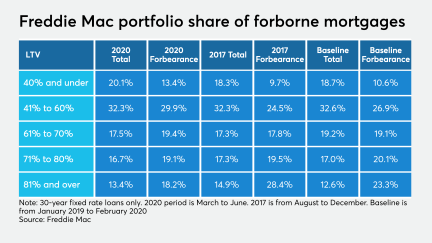
A Freddie Mac study of loans in forbearance from 2017 and 2020 found that, over both periods, borrowers had low credit scores and high debt-to-income ratios.
Property-level insurance and funds fronted by servicers appear to mitigate the potential losses from damages and repairs in the Gulf Coast from the massive storm.

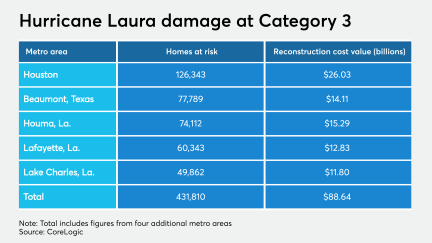
If it makes landfall as a Category 3 storm as was initially projected, damage from Hurricane Laura's surge could potentially devastate 432,810 residential properties in Texas and Louisiana, according to CoreLogic.
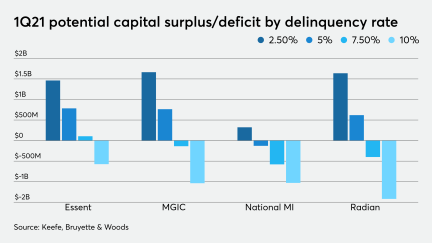
If delinquency rates rise, all four stand-alone firms would have a capital shortfall.
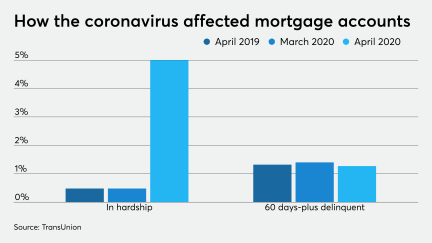
Loans with coronavirus-related forbearance have to be reported as current to the credit bureaus but there’s a ripple effect from them that has implications for credit reports and underwriting.
The potential for longer homeowner recovery times from hurricanes could hurt mortgage companies that need to advance funds to investors from missed payments.
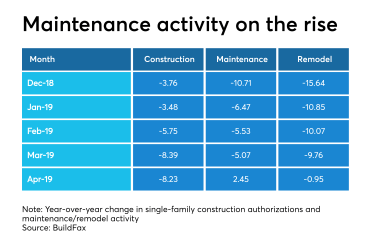
The Property Assessed Clean Energy sector is getting a boost from the expansion of improvements eligible to be financed via tax assessments, including fire resiliency and total building renovations, according to DBRS.
Lawmakers have had to extend the program eight times since October 2017, as Congress has been unable to pass broader reforms.

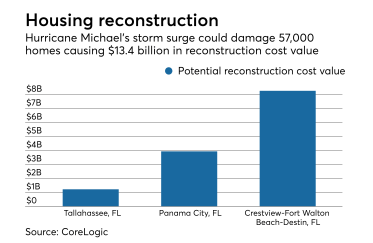
Destruction from Michael's storm surge and flooding has potential to affect 57,000 homes, with a worst-case total of $13.4 billion in reconstruction cost value, according to CoreLogic's latest estimates.
While the severity of Florence was reduced prior to Friday morning's landfall, mortgage servicers are taking proactive steps in addressing the emergency situation.
The new policy, meant to assist borrowers in Puerto Rico and the U.S. Virgin Islands, will let servicers evaluate borrowers using pre-disaster payment information.
Couldn’t load more articles. Try again.