
BHG securitizes a pure consumer loan pool—its first—raising $273.3 million
The collateral pool has 2,701 loans, which have a WA original term of 91 months, and an average balance of $76,737, and an average rate of 17.26%.

The collateral pool has 2,701 loans, which have a WA original term of 91 months, and an average balance of $76,737, and an average rate of 17.26%.
New York Community Bancorp faced new questions Friday after a flurry of disclosures led to a steep sell-off in its stock. The embattled Long Island-based lender beefed up its risk leadership, but Fitch cut its rating to "junk" status.

The turmoil at New York Community Bancorp resumed Thursday with the departure of CEO Thomas Cangemi. The embattled regional bank, which also recorded a $2.4 billion goodwill impairment charge and disclosed other new problems, saw its share price plunge.

The changes made to the schedule of bringing advanced credit metrics to major mortgage investors Fannie Mae and Freddie Mac affect bi-merged reports and Vantagescore 4.0's implementation.

Initial overcollateralization is 11.3%, up from 8.50% of the initial collateral pool balance. Aside from that adjustment, target overcollateralization is 22.45%, compared to 13.00% on Westlake 2023-4 deal.

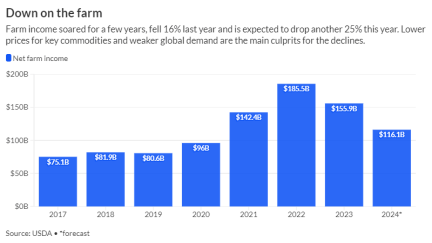
The USDA forecasted farm profits will plunge 26% this year, potentially creating credit quality challenges for lenders.
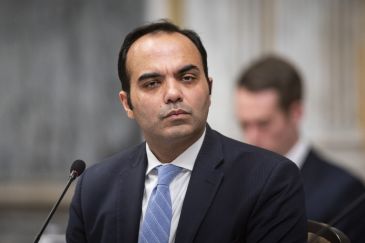
Lenders collected an estimated $25 billion in additional interest income last year by raising the average margin on annual percentage rates, or the amount above the prime rate, according to the Consumer Financial Protection Bureau.
The median interest rate that large credit card issuers charged consumers with good credit in the first half of 2023 was 28.2%, compared with 18.15% at smaller banks and credit unions, according to a study by the Consumer Financial Protection Bureau, which is on a campaign against excessive fees.
Investors have hammered the New Jersey-based lender following the turmoil at New York Community Bancorp. But Valley executives say there are key differences between the two real estate-focused banks, and they express confidence that the bank's underwriting will hold up again this cycle.
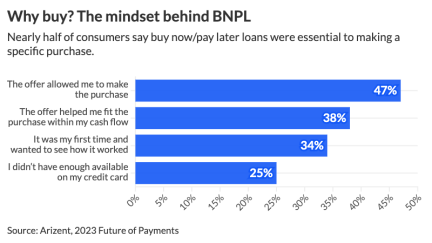
Shared services organizations PSCU and Co-op Solutions are offering post-purchase buy now/pay later loans, with the goal of reaching consumers who are concerned about managing their credit.
American Honda Finance Corp., the financing division of carmaker Honda, says that the Consumer Financial Protection Bureau sent it a "civil investigative demand" connected to the "furnishing of credit reporting information on consumer accounts."

Issuance has been scant since DRIVE 2021-3 closed in November 2021. A lack of comparison deals from recent years makes it more difficult to forecast losses.

The regional bank announced a leadership shakeup on Wednesday, capping a tumultuous week in which shareholders became spooked about its exposure to the commercial real estate sector.

Former Flagstar CEO Alessandro DiNello, who had been New York Community's nonexecutive chairman, was named executive chairman after the Long Island bank's stock price fell by more than 59% in a week. New York Community also issued updates on both its deposit situation and its search for a new chief risk officer.

Car loan delinquencies are worsening across all age groups and income levels, as high interest rates and elevated car prices take a toll, according to the New York Fed. But executives at some large auto lenders remain relatively confident about their customers' ability to stay afloat.

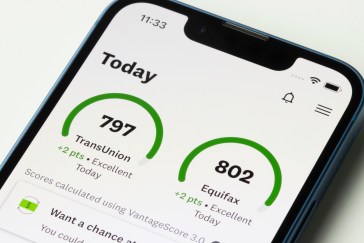
The majority of users are looking for new credit lines and others want to improve their scores. Credit monitoring by consumers may be a good indicator of both, Transunion found.
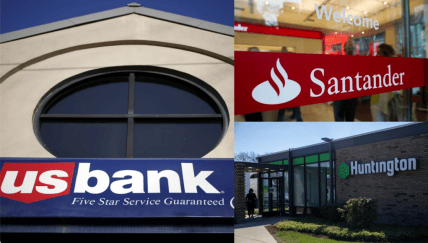
With tougher capital requirements looming, a number of regionals including U.S. Bancorp, Huntington and Santander are using these new instruments to share risk with nonbank investors and lighten their capital load. Experts point out the pros and cons.
The deal involving Southern California Bancorp and California BanCorp, expected to close in the third quarter, would form a $4.6 billion-asset lender with a footprint spanning San Diego, Greater Los Angeles and the San Francisco Bay Area.

The transaction, secured by non-prime consumer loans, has a three-year revolving period with initial credit enhancement of 41.15% on the class A notes.

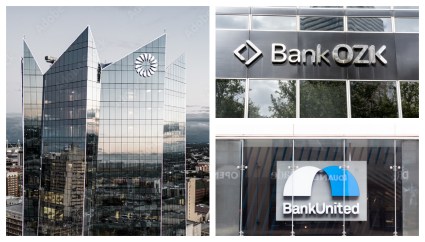
Cullen/Frost in Texas, BankUnited in Florida and Bank OZK in Arkansas are among the banks that have, at least for now, allayed investors' fears about their exposure to the CRE sector.
Couldn’t load more articles. Try again.