Why some bond traders bet relentless selloff will soon lose steam
Wednesday brings the next pivotal data point, with the release of the latest consumer-price figures, which are forecast to show inflation remains sticky.

© 2026 Arizent. All rights reserved.

Wednesday brings the next pivotal data point, with the release of the latest consumer-price figures, which are forecast to show inflation remains sticky.
In the US, the 10-year Treasury yield rose as high as 4.73% Wednesday, pushing it toward the 5% peak hit in October 2023, before pulling back down.

It was propelled in part by supply pressure, as demand was soft for the first of three Treasury auctions this week and as a slew of high-grade corporate bond offerings competed for investor cash.

Uncompleted trades involving the 20-year Treasury exceeded $21 billion in the week ended December 25 … the second-highest amount in the history of the tenor.

The overall price drop was offset by interest payments, allowing a broad gauge of the Treasury market to post a gain of about 0.7% this year through Dec. 30.

Investors have been demanding additional yield compensation, or term premium, for long-term Treasuries amid signs of sticky inflation.

Sales of bonds earmarked for supplemental coverage of large windstorms, earthquakes and other events totaled $17.7 billion, up 7% from the previous record set a year ago.

EBRD plans to transfer part of the risk tied to roughly $1 billion of private-sector loans to a group of pension funds and asset managers.

The rally left yields lower by at least three basis points, with short maturities — more sensitive to Fed policy changes — falling the most.

The market retraced an opening selloff, with longer-dated benchmarks outperforming the front end.

The renewables firm also plans to raise as much as $500 million by February via banks or a private placement in the offshore market.

Tuesday's declines lifted yields by one to four basis points across maturities after Trump said he'd impose additional 10% tariffs on goods from China and 25% tariffs on all products from Mexico and Canada.
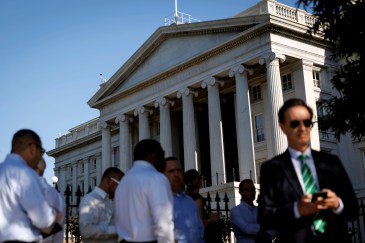
Donald Trump's presidential victory, stubbornly elevated inflation and a steady drumbeat of strong economic data have pushed 10-year Treasury yields up sharply since mid-September.

Yields on 30-year bonds rose as much as 6 basis points to 4.68%, a level last seen at the end of May.

The benchmark 10-year Treasury yield topped 4.5% for the first time since May after the release of retail sales data including hefty upward revisions.

China raised $2 billion from three- and five-year securities at one and three basis points over Treasuries, respectively, according to a person familiar with the matter.

Trump has promised levies on US imports that would upend global trade, tax cuts that would further stretch the federal budget and deportations that could shrink the pool of cheap labor.

Yields on both 10-year and 2-year Treasurys moved significantly higher after the Trump election victory and that's bad news for mortgage rates going forward.
A measure of daily yield swings is at its highest in a year as traders position for further losses that could send 10-year yields as high as 4.5% over the next three weeks.

Since the first SLL was arranged roughly seven years ago, the market for such loans has grown to almost $1.8 trillion.

Couldn’t load more articles. Try again.