Opinion Election won’t impact mortgage industry like CARES Act problems will
How we resolve millions of delinquent mortgages due to COVID is the only question that matters.
Christopher Whalen
Whalen Global Advisors LLC
© 2026 Arizent. All rights reserved.

How we resolve millions of delinquent mortgages due to COVID is the only question that matters.
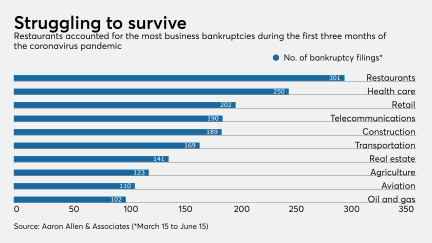
Many eateries that relied on outdoor dining to survive the pandemic could see revenues plummet as the weather turns cold.
The lease/purchase home operator is securitizing a loan with higher debt-service coverage that most prior MBS issues from its trust. It also is providing a geographically diverse mix of homes that make the deal less vulnerable to isolated outbreak hotspots.

Automotive services chain operator Driven Brands is pursuing its next whole-business securitization, despite a recent sales decline among its franchise stores due to slowing economic conditions related to the pandemic.

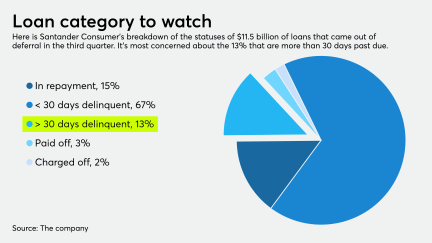
The subprime lender cited low odds that Washington will deliver further economic relief, and the fact that $1.5 billion of loans whose deferral period expired are now more than 30 days behind.
A booming housing market contrasts with a slow-to-improve job market, making for lopsided improvement in the number of troubled mortgages, according to numbers from the Mortgage Bankers Association.
Lenders have spent months puzzled by the persistently low delinquencies on their credit cards. Now, they’re seizing the moment.

With the COVID-19 pandemic creating unprecedented challenges for small businesses, American Express has increasingly targeted its investments in that niche.

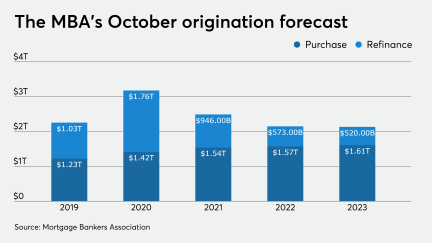
But an expected drop in refinancings as mortgage rates rise should more than cancel that out, resulting in declining overall volume through 2023.
The U.S. economy continued to grow across the country as it recovered from the coronavirus pandemic, but the picture was uneven, according to a new report from the Federal Reserve.
Moody’s Investors Service sees improved recovery prospects for the U.S. restaurant industry next year, buoyed by projected revenue growth of 15% despite ongoing concerns of the length and impact of the coronavirus pandemic.

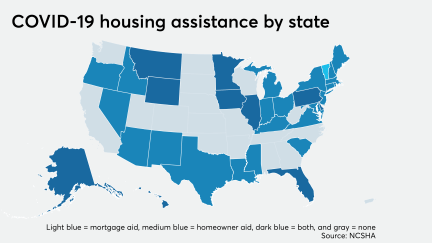
A total of 34 states have offered coronavirus-related rental or mortgage assistance, much of which is funded by the CARES Act, according to the National Council of State Housing Agencies.
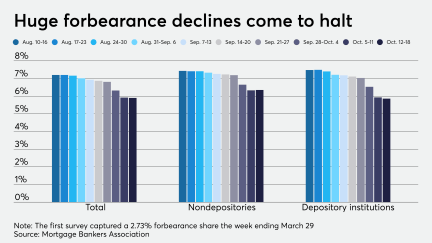
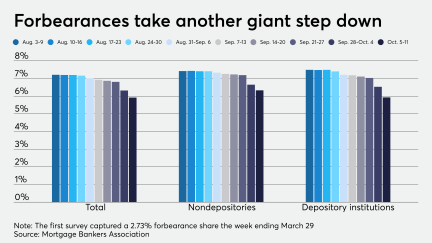
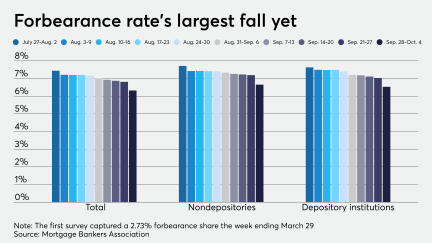
The overall forbearance rate was under 6% for the first time since April as another large swath of loans fell out of CARES Act coverage, according to the Mortgage Bankers Association.
The ratings agency reports that asset-backed securities backed by small-ticket equipment leases and loans is subject to greater volatility from small-business payment deferrals.

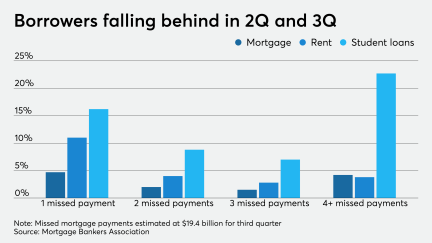
As financial distress mounted, 12.4% of mortgagors missed payments across the second and third quarters of 2020 — and it could get worse, according to a study from the Mortgage Bankers Association.
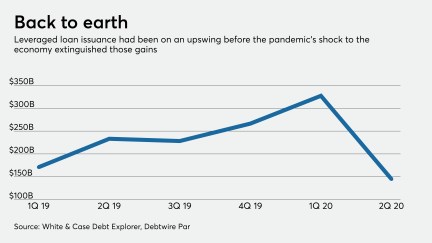
Defaults have been milder than expected thanks to government relief and stricter underwriting. But with the crisis dragging on and policymakers unable to agree on a stimulus plan, loans to highly indebted companies remain at risk.
Forbearance rates dropped below 7% for the first time in six months, but the decrease is largely due to the ending of the initial six-month term of forbearance granted by the legislation, according to the Mortgage Bankers Association.
Prestige's new $377M securitization has a collateral pool in which over 44% of the loans are from borrowers with recent Chapter 7/13 discharges.

The 1,400-store chicken wings chain, which has benefited from carry-out dining trends during the pandemic, will sponsor its second whole-business securitization since 2018.

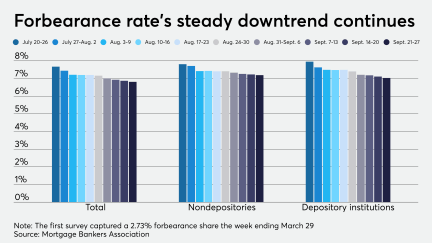
GSE mortgages in forbearance fell for the 17th straight week, spearheading the overall downtrend, according to the Mortgage Bankers Association.
Couldn’t load more articles. Try again.