Citizens, Cullen/Frost join parade of banks eliminating NSF fees
The two regional banks announced plans to abandon nonsufficient fund fees and make other moves that will reduce the revenue they collect from cash-strapped consumers.
Executives at banks north of the border pointed this week to several potential U.S. economic snags, including inflation, the possibility of a housing market correction and soaring energy prices.
The nation's largest bank indicated Monday that it may again offer home equity lines of credit to a wide audience. Rising mortgage rates have made the product more attractive after a long drought when low rates suppressed demand.
In a recent survey, just over half of community bankers expressed concern that the central bank will harm the U.S. economy by raising rates too fast in its quest to contain inflation.
The Federal Reserve's unanimous approval is a win for the Rhode Island company, though it will have have to take part in an additional round of stress tests in 2023.
The long-awaited Community Reinvestment Act reform plan is likely to address climate change and bank partnerships with nonbank lenders, while also taking into account the shrinking number of U.S. bank branches, government officials said Monday.
Six members of the Senate Banking Committee are asking questions about a flurry of lawsuits against credit card customers. The bank denies that it has resumed using robo-signing.
The largest bank based in oil-rich Texas is building a framework for gauging the threat that climate change poses to its business and plans to disclose more information on the subject this summer. Meanwhile, its energy loan portfolio shrank 24% year over year.
The Alabama bank is buying Clearsight Advisors to add to its booming capital markets division.
A clash among FDIC board members has intensified a debate about whether regulators should take a tougher look at large M&A deals. House Financial Services Chair Maxine Waters added to the frenzy by calling for a moratorium on approving big acquisitions.
In the wake of Hurricane Ida, the latest storm to batter the Gulf Coast, John Hairston is grappling with the consequences of a warming planet. He suggests that it's imperative for banks and their regulators to be part of the solution.
Alastair Borthwick, the president of global commercial banking, will succeed Paul Donofrio, who is transitioning to a new role as head of sustainable finance. The company also appointed three women to its executive leadership team.
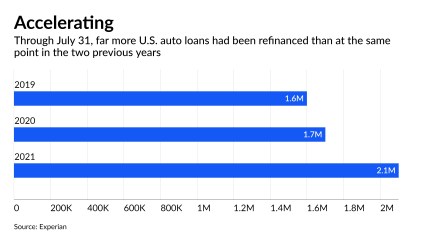
Subprime borrowers whose credit scores have risen since they bought their cars are increasingly looking for a better deal. Credit unions and small banks are seizing the opportunity, often with the help of fintechs.
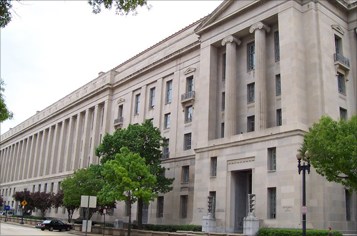
In late July, the Justice Department notified the Houston bank of a potential lawsuit alleging violations between 2013 and 2017, according to a securities filing. Cadence said that its prospective merger partner, BancorpSouth, supports the settlement discussions.
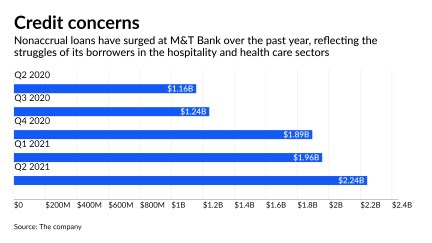
Comerica, which focuses on the energy sector, reported strong payment trends last quarter, while M&T, which concentrates more on real estate, showed deterioration. The divergence reflects varying exposures to sectors hit hard by the COVID-19 recession.
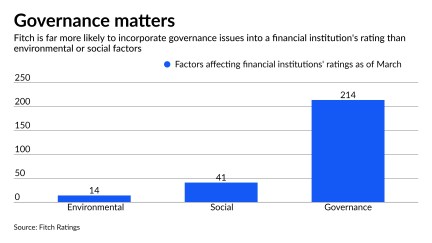
Fitch says it will be weighing failures of management standards and practices at banks more heavily when considering possible downgrades. ESG advocates are cheering the development.
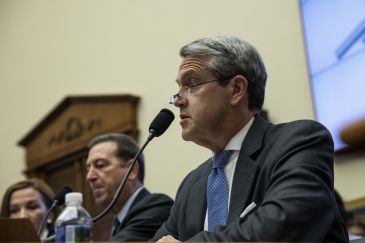
Legacy contracts using the London interbank offered rate — which is set to be phased out at the end of this year — were granted a reprieve to mid-2023. However, there is no wiggle room on when the rate will expire for new deals, said Federal Reserve Vice Chairman Randal Quarles.
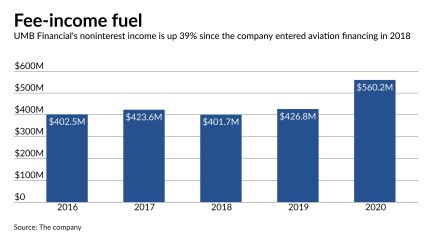
UMB Financial’s success in aviation financing has boosted fee income, and the Missouri company has opened an office in Dublin — a hub for airplane sales and leases that could get busier as the airline industry restructures.
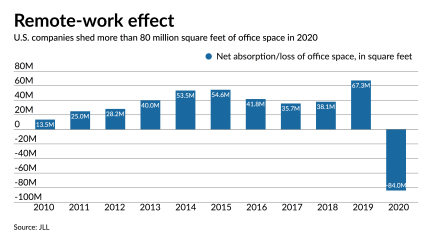
Already contending with stressed retail, hotel and restaurant loans, bankers are beginning to view office lending — historically a safe bet — as increasingly risky as companies of all types rethink their space needs.
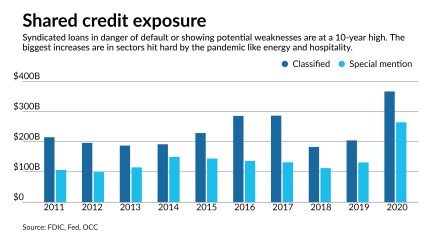
Shared national credit balances rose 5% last year, and the percentage of at-risk loans nearly doubled. Regulators point out that banks have stashed away extra capital, but a lot will depend on the speed of the economic recovery and the performance of nonbank loans.
Couldn’t load more articles. Try again.