Serious mortgage delinquencies remain high as overall rate declines
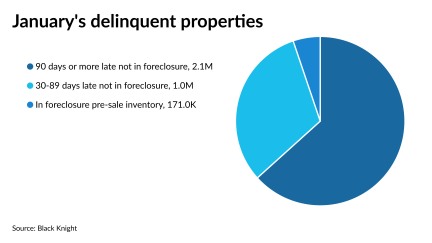
Servicers could be dealing with approximately 1.8 million distressed properties when the latest forbearance extension ends in June, Black Knight said.
© 2026 Arizent. All rights reserved.

Servicers could be dealing with approximately 1.8 million distressed properties when the latest forbearance extension ends in June, Black Knight said.
While the Mortgage Bankers Association hailed the move, some experts say it could negatively impact housing inventory.

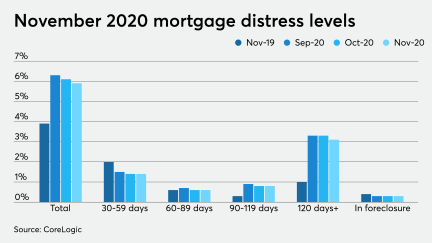
Gains in consumer financial stability helped to decrease the rates of distressed home loans, but job creation is needed to make recovery sustainable, a CoreLogic report found.
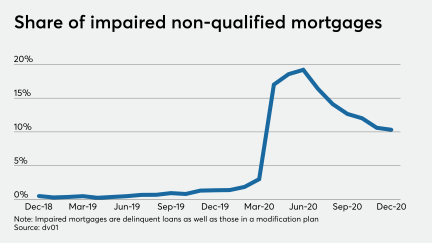
However, the share of new impairments increased, likely as a result of the high concentration of these loans given to self-employed borrowers.
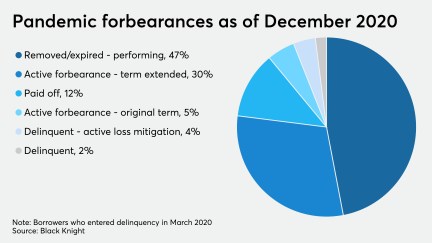
The CARES Act-related forbearances could be “lulling us into a false sense of security” as 12-month expirations approach, according to Black Knight.
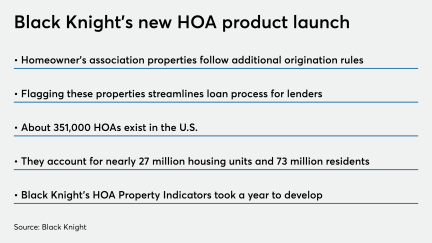
Black Knight’s product is designed to assist mortgage lenders in performing due diligence while also preventing heightened risk of foreclosure losses.
U.S. credit card delinquencies reached record-low levels in 2020, as Americans took advantage of stimulus checks and adjusted their spending habits, according to a new report.

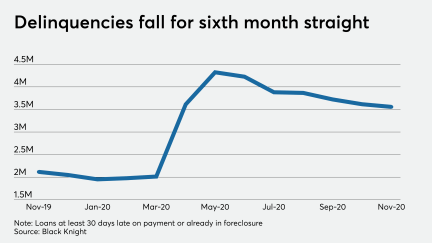
Declining month-over-month delinquency levels and the rollout of COVID-19 vaccinations potentially give hope to more normalized economic activity.

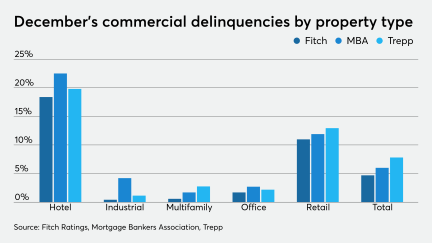
Fitch and Trepp reported that overall commercial mortgage-backed security delinquencies were down, while the MBA reported a slight increase.
Deals, trends and research in structured finance and asset-backed securities for the week of Dec. 31-Jan.7

The largest U.S. shopping center became delinquent on its debt last year after its owner Triple Five Group began skipping mortgage payments, citing hardships from the COVID-19 pandemic.

While the balance of newly delinquent loans fell by 50% from November, the ratings agency warned that many borrowers will likely struggle to bring loans current under ongoing pandemic conditions.

Reports indicate distressed owners would rather surrender their hotel or retail properties instead of negotiate workouts on delinquent loans as the pandemic spread carries on.

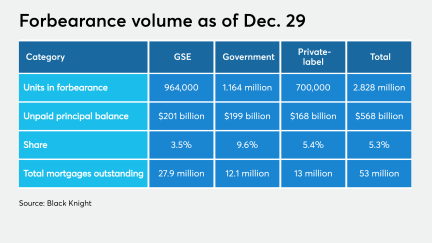
With limited plan removals due to the holidays, mortgages in coronavirus-related forbearance rose by 15,000, according to Black Knight.
About 4,400 loans started the foreclosure process in November, alongside 176,000 mortgages in active foreclosure.
With infection rates rising and unemployment claims increasing since Thanksgiving, mortgages in coronavirus-related forbearance rose by 37,000 last week, according to Black Knight.
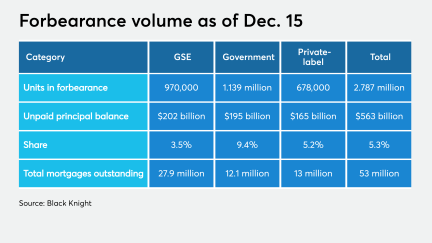
The percentage of seriously delinquent loans hit 5.8% in the third quarter, up from 1.5% a year earlier but down from 6.8% in the second quarter.

While 12,000 mortgages exited forbearance, the most borrowers entered forbearance protection in a week since early September, according to Black Knight.
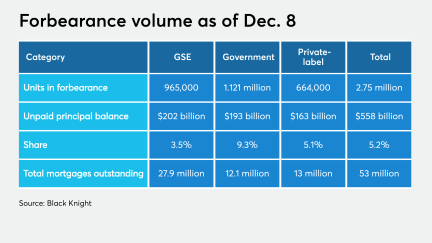
The more-than-$550 billion market for bonds backed by U.S. commercial mortgages may face losses even after promising Covid-19 vaccines become widespread, as key parts of the real estate market may not return to full strength anytime soon.

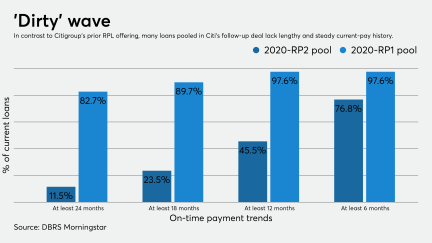
Citigroup's realty arm is sponsoring a $1.06 billion RMBS of highly seasoned mortgage loans with troubled histories. All of the loans were acquired via a Fannie whole-loan auction.
Couldn’t load more articles. Try again.