Credit-rating downgrades could mean higher costs for banks
Moody's said higher funding costs, a potential decline in bank capital and growing risk in the commercial real-estate industry prompted many of the downgrades.
© 2026 Arizent. All rights reserved.

Moody's said higher funding costs, a potential decline in bank capital and growing risk in the commercial real-estate industry prompted many of the downgrades.
The casual-dining chain showed improved 3Q performance numbers as it adapted to COVID-19 restrictions with expanded pickup-and-delivery service options.

The ratings agency reported that the average percentage share of triple-C rated loans in CLO portfolios fell below 10% for the first time since March.

S&P stated lessors are confronted with the increasingly troubled financial health of airlines, which has led to a sharp drop in aircraft values and lease rates as well as an array of requests for deferrals or delayed payments on rental contracts.

Deals, trends and research in structured finance and asset-backed securities for the week of Aug. 28-Sept.3

The Dallas-based chain was forced to advance additional principal payments on its asset-backed notes after trailing 12-month sales fell below $1.5B.

The fitness chain weathered an initial round of COVID-19 closings in March to continue supporting investor payments on $1.8 billion of whole-biz securitization notes. But surging coronavirus spreads in its key markets could force a reversal of gym reopenings, subjecting the bonds to potential downgrades.

S&P lowered the ratings on 23 tranches of notes in the deals, affirmed eight others, and kept the other 40 notes on watch for potential downgrade. Twenty of the downgraded notes are on notice for potential future downgrades, as well.

“Since April, the decline in corporate credit has resulted in a significant number of downgrades among the assets underlying some CLOs,” a Moody’s press release stated on Wednesday.
In a report issued Tuesday, the ratings agency notes that 1,287 companies as of April 28 faced prospects of potential debt and issuer downgrades, impacted by the coronavirus outbreak and a virtual shutdown of the global economy this spring.

A $425 million franchise-fee securitization sponsored by TGI Fridays has taken another ratings hit because of the 796-store chain’s increasingly poor financial performance, now magnified by COVID-19 stresses.

Fitch Ratings on Tuesday sharply downgraded all of Hertz Global Holdings’ outstanding asset-backed bonds, amid growing doubts that the rental car company can pay off the notes in the event of a COVID-19 pandemic-driven bankruptcy.

An indefinite closure of New York retail businesses during the COVID-19 pandemic added credit pressure on revenue bonds issued for the state’s largest mall.
The agency is scrutinizing recent deals involving credit-card receivables from private specialty finance companies that issue general-purpose and private-label retail cards to a near-prime/non-prime customer base.

About $474M in bonds backed by aircraft leases managed by GE Capital Aviation Services (GECAS) has been downgraded, tied to the increasingly poor financial health of several foreign airlines from the COVID-19 shutdown in global air traffic.

Hertz and Avis will likely each have to seek to relief from lenders – including asset-backed securities investors that make up the bulk of funding for both companies’ fleets, Moody’s stated in research reports.

Moody’s Investors Service has placed hundreds of non-senior U.S. CLO tranches under review for downgrade, affecting 358 broadly syndicated loan-backed portfolios as Moody’s measures the ongoing economic shocks of the coronavirus outbreak.

Fitch Ratings has placed subordinate notes on two U.S. collateralized loan obligations on notice for potential downgrades, contemplating a ratings action that has not previously occurred for a post-crisis CLO.

Dramatic Fed intervention may steady some markets, but unless something changes — and, judging by the last two weeks, it very well could — the central bank won’t be there to save fallen angels. Which brave investors will step up?

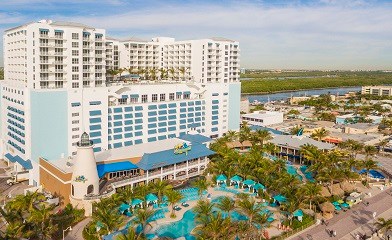
The credit watch involves single-borrower securitizations of commercial mortgages for high-priced resorts in Florida and Hawaii.
Couldn’t load more articles. Try again.