Deutsche Bank will pay $220 million to resolve U.S. Libor probe
The accord is the latest development in investigations by governments across the globe into banks’ manipulation of benchmark interest rates.

© 2026 Arizent. All rights reserved.

The accord is the latest development in investigations by governments across the globe into banks’ manipulation of benchmark interest rates.
The U.S. Second Circuit ruled that Momentive Performance Materials should use what's known a a "market rates" formula to determine the appropriate payout for a series of replacement notes issued to bondholders.

British regulators are touting the success of their so-called regulatory sandbox. Their American counterparts have been unable to agree on a comprehensive scheme to foster innovation.

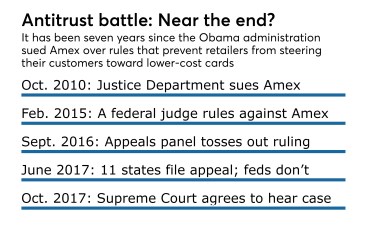
In a surprise move, the Supreme Court will decide whether Amex may bar merchants from steering customers to less expensive card networks. The card issuer will have to prove the consumer gain from its practices outweighs the merchant pain.
The lawsuit against Navient Corp. demonstrates that despite the recent appointment of more industry-friendly regulators in Washington, financial services companies still face significant legal threats from state capitals.

The groups argue that the CFPB did not properly conduct a cost-benefit analysis of the rule banning mandatory arbitration agreements and that the final product will harm, not help, consumers.

Payday lenders and arbitration supporters are claiming the CFPB has met more often with consumer groups than industry, laying the groundwork for likely lawsuits on key rules.
JPMorgan Chase is among four banks sued by a trustee for investors in the debt of Millennium Health LLC, alleging the lenders failed to inform them of a federal probe into the billing practices of the borrower.

Republican efforts to repeal the Consumer Financial Protection Bureau's arbitration rule were dealt a significant blow Friday by another Wells Fargo scandal.

U.S. District Judge André Birotte has dismissed all federal claims against Renovate America and its government bond-issuing partners in three lawsuits that had sought class-action status.

Banks and other firms collecting defaulted debt originated by another company are not subject to the kinds of restrictions placed on third-party debt collectors, the Supreme Court ruled Monday in a unanimous decision.

Responding to a request to reinstate an LSTA lawsuit that would modify risk retention, the agency argued that the trade group's arguments "both fail.”