Hassett sees Fed acting if October inflation data come in high
Hassett was speaking shortly after the latest PCE inflation report showed that core price gains, excluding food and energy, clocked a 3.1% year-on-year pace for September.

© 2026 Arizent. All rights reserved.

Hassett was speaking shortly after the latest PCE inflation report showed that core price gains, excluding food and energy, clocked a 3.1% year-on-year pace for September.
Since the turmoil in France escalated from the end of last month, moves in that country's bonds have affected Treasuries several times — either by pushing them down in tandem or causing flows into U.S. debt as a haven trade.

Anxieties over AI drew attention from Democrats and Republicans during Treasury Secretary Scott Bessent's testimony at the House Financial Services Committee.
Thursday's purchases were under increased scrutiny as the first since Bessent unexpectedly announced that the department would "at least double" the size of operations previously penciled in at $2 billion.

His action after 10-year Treasury yields, his self-specified financial benchmark, rose above where they were before Trump returned to office, shows mounting worries in Washington.

As the AI borrowing spree keeps accelerating, the spillover effect is playing a growing role by taxing the market's ability to absorb so much debt.

Over the course of a week, he took steps that they see as aimed at easing pressure on the Treasury market after long-term rates surged to a 19-year high.

Central bankers typically use their benchmark federal funds rate to steer the economy because it allows for a level of fine-tuning when the market is left to its own devices.
Coming into 2026, State Street expected yields to fall toward 3.5% or lower this year, but instead they've been on the rise.

The Treasury chief also predicted that the US economy will accelerate "on a non-inflationary basis for the rest of the year."

It was the latest example of the Treasury chief characterizing the surge in prices since the Iran war began as a one-off hit.

The two countries reached an "important consensus" on maintaining stable economic and trade relations while expanding cooperation in various fields.

The yield on the 10-year has eclipsed 4.48% this year, while the 30-year bond yield surpassed 5.03% on May 4. representing more than 50 and 40 bps jumps, respectively.

The status quo might be jolted by individuals and companies pulling cash from banks and money markets to meet tax obligations, spurring banks to tap liquidity facilities.

The $31 trillion market extended its losses on Friday, pushing yields on 10-year notes up by three basis points — and extending the rise this week to 22 basis points, the biggest such increase since President Donald Trump announced sweeping tariffs on US trading partners.

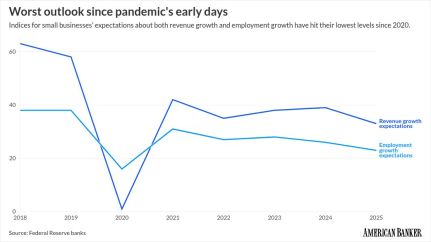
Key measurements of small businesses' health remained stable in 2025, according to a new study by the 12 regional Federal Reserve banks. But those firms' optimism about the future reached its lowest point since 2020.
John Velis, Americas macro strategist at BNY, said the US can lean on T-bills to plug that "substantial" gap, helping to explain why the reaction in US Treasuries to Friday's ruling has so far been muted.

The top court's verdict eliminates import taxes that have acted as a restraint on the government's $1.8 trillion budget deficit and the swelling national debt.

Federal Reserve Gov. Lisa Cook said in a speech Wednesday night that the central bank's credibility depends on its ability to bring inflation back to its 2% target.

The Federal Open Market Committee voted 10-2 Wednesday to hold the benchmark federal funds rate in a range of 3.5%-3.75%.

Couldn’t load more articles. Try again.