Agencies sign off on final Volcker Rule changes
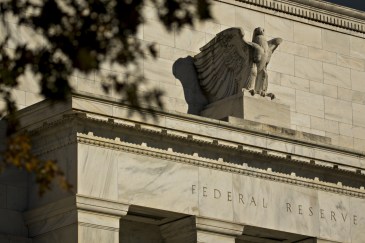
The reforms will result in significant changes to the proprietary trading ban first proposed by former Federal Reserve Chairman Paul Volcker and mandated in the Dodd-Frank Act.
© 2026 Arizent. All rights reserved.

The reforms will result in significant changes to the proprietary trading ban first proposed by former Federal Reserve Chairman Paul Volcker and mandated in the Dodd-Frank Act.
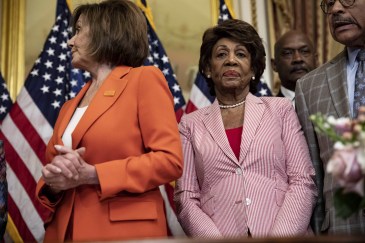
The two Democrats waded into a court battle over the president's ability to fire a director of the Consumer Financial Protection Bureau.
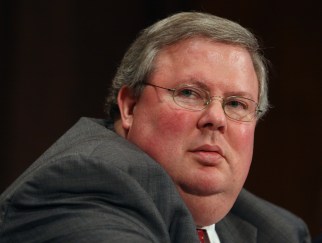
The Federal Housing Administration chief has already been serving as the acting deputy secretary of the Department of Housing and Urban Development.
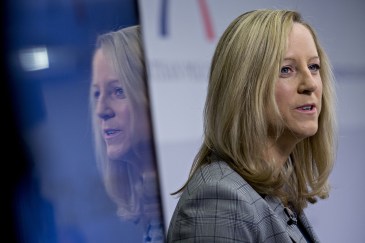
By declaring that she has too much statutory power, the agency’s director has potentially opened a floodgate of litigation.
If the court agrees to hear the case, its conservative majority could make it easier for a president to fire a CFPB director, though other outcomes are possible.
The recapitalization of Fannie Mae and Freddie Mac prior to the 2020 election is unlikely even if the net worth sweep ends, according to a Keefe, Bruyette & Woods report.
The proposed reforms of Fannie Mae and Freddie Mac have gotten all the attention, but the administration also wants to scale back the Federal Housing Administration, expand its capital cushion and adopt risk-based pricing. Some of the ideas have former agency officials concerned.

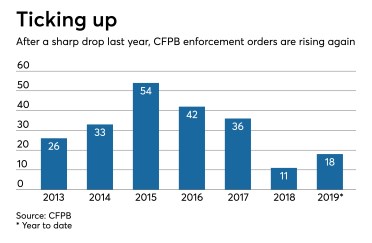
There were signs Kathy Kraninger would continue a rollback of consent orders and investigations, but many observers see an aggressive approach reminiscent of the Obama era.
The agency's director told congressional leaders and staff that she backs a Supreme Court challenge to the bureau's leadership structure.
The Supreme Court may be closer to examining a key restraint on a president's ability to change CFPB leadership.
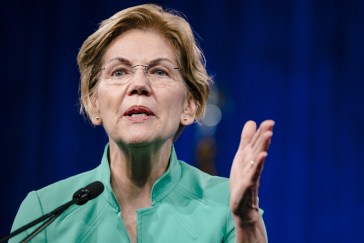
The Treasury secretary said he hopes lawmakers will back reforms of Fannie Mae and Freddie Mac within three to six months.
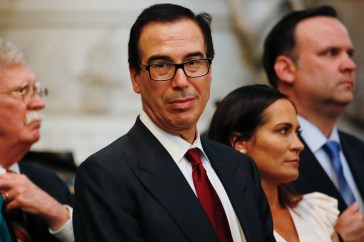
The Trump administration raised the goal posts for ending the conservatorships of Fannie Mae and Freddie Mac, but how officials get there is still highly uncertain.
The Treasury Department made clear in a much-anticipated report that it prefers Congress take up reform of the government-sponsored enterprises, but it also recommended steps that federal agencies could take without legislation.

After two regulatory agencies adopted final revisions to the rule, Dodd-Frank defenders expressed concern that the amendments to the proprietary trading ban undermined the post-crisis statute.
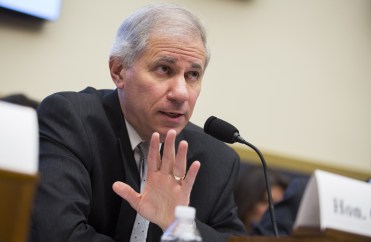
The agencies had proposed an "accounting prong" as an alternative means to determine which proprietary trades are banned, but their final rule heeded industry concerns that that would be worse than the current approach.
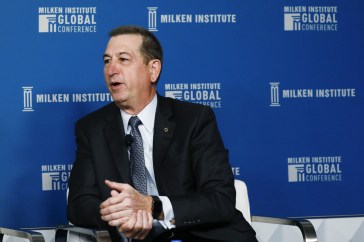
Robert G. Cameron, a former official at the Pennsylvania Higher Education Assistance Agency, will succeed Seth Frotman as the bureau's point person on student lending complaints.

Some believe the administration will delay action on Fannie Mae and Freddie Mac to avoid any political fallout. Others say the window for reform is closing.

Treasury and HUD are close to unveiling administrative and legislative options for ending the conservatorships of Fannie Mae and Freddie Mac. Will their findings be heavy on detail or leave a lot unanswered?
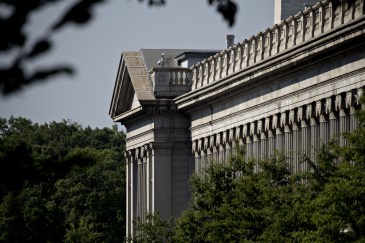
Federal Reserve Chairman Jerome Powell says the agency is closely monitoring leveraged lending risks, but suggests further regulations on banks aren’t warranted.
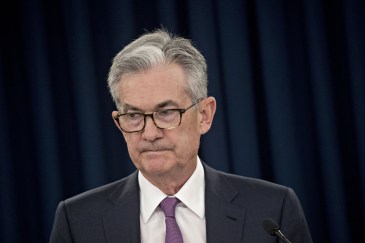
The mortgage agency has hired Eric Blankenstein, who sparked controversy while at the consumer bureau over past revelations of racially charged writings.

Couldn’t load more articles. Try again.