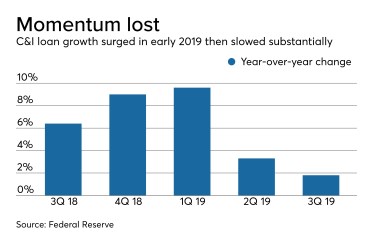
Why the C&I slowdown is likely to persist in 2020
Political uncertainty, sector-specific concerns as well as interest rate and labor trends may continue to depress commercial and industrial lending in the coming months.
Many business customers are putting off expansion because they can’t find enough workers to fill available jobs.
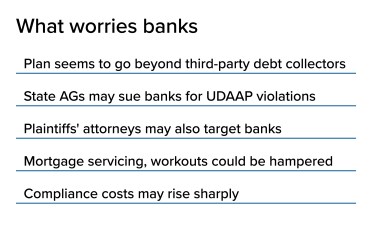
Lenders contend the proposal goes beyond policing third-party debt collectors and could expose banks to enforcement actions and lawsuits.
It hasn't stimulated loan demand in ways banks hoped it might, and some CEOs fear future rate cuts might cause companies to hunker down.
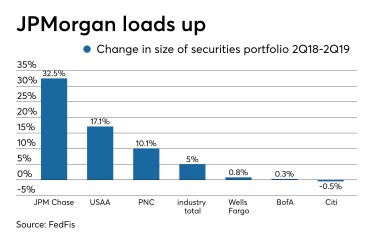
The bank started buying more Treasurys and mortgage-backeds over a year ago, long before talk about rate cuts. What did it know that its rivals didn't?
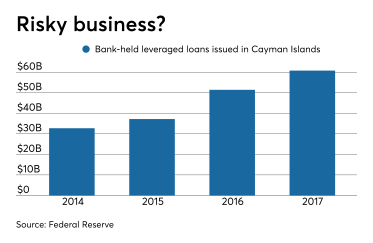
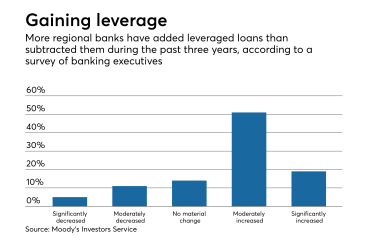
Fresh data from the Fed, FDIC and Bank of England shows that, directly or indirectly, banks are taking on more leveraged loans. But whether this puts their loan and securities portfolios at risk remains open for debate.
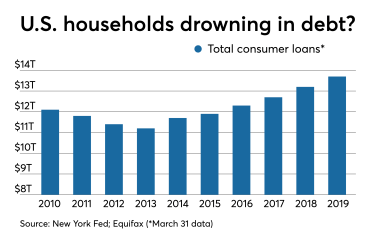
The Democratic presidential candidate argued in a blog post that the U.S. could avoid a recession by canceling most student debt and authorizing regulators to more aggressively monitor leveraged lending.
Hugh Frater loses the "interim" title, taking full control of the government-sponsored enterprise as Congress begins debating (again) the future of Fannie as well as Freddie Mac.
Brick-and-mortar retail isn’t dead yet. Though the trend of retailers closing stores in the face of stiff competition from e-merchants is certainly troubling to commercial real estate lenders, it would be a mistake to conclude that all retail loans are risky. Here's a look at which ones are the safest and, potentially, the scariest.
The foray into digital consumer lending follows a similar move by rival Citigroup.
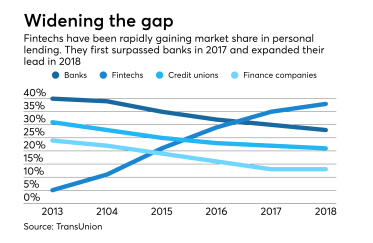
Personal loan balances hit an all-time high in 2018, while fintech lenders widened their market share lead over banks and credit unions, according to new data from TransUnion.
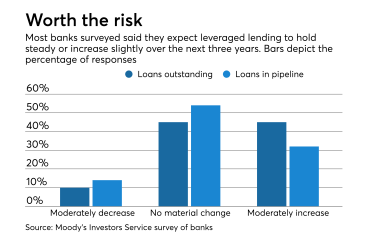
Amid widespread concern about their exposure to leveraged lending, the debt rating agency says banks have sufficient earnings and capital cushions to continue investing in the sector.
In selling its Walmart credit card portfolio to Capital One and extending a partnership with Sam’s Club that appeared to be in peril, Synchrony Financial avoids an expensive legal battle with the world’s largest retailer.
Many federal agencies have been closed for more than three weeks, making it the longest shutdown in U.S. history. With no end in sight, here's how it's affecting banks, credit unions and mortgage lenders.
Affirm, which for six years has plied its trade as a point-of-sale lender, wants to move deeper into banking by offering a high-rate savings account.
Automating the loan application process is a potentially game-changing development that could put more car shoppers in control of which bank or credit union finances their purchase.
While they won’t be in position to enact legislation, House Democrats could use their newfound power to spotlight issues that Republicans have largely ignored, including the exploding levels of corporate debt.
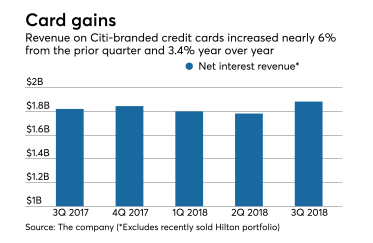
Citigroup spent years reeling in customers with promotional rates, many of which have expired or soon will. The bank thinks it can keep a large number of those customers and make more money off of them.
The marketplace lender recorded an impairment charge tied to the acquisition of a specialty lending business and is still being hit with costs stemming from the scandal that toppled its previous CEO.
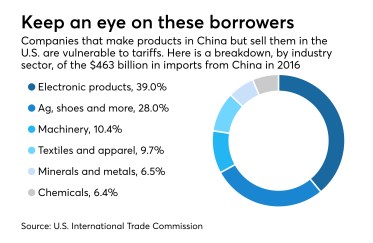
If President Trump’s tariffs on steel and other products stay in place long, big U.S. importers would be hurt and pass on the pain to their midsize and small-business suppliers — which are the bread and butter of commercial lending.
Couldn’t load more articles. Try again.