Will coronavirus permanently change CRE lending?
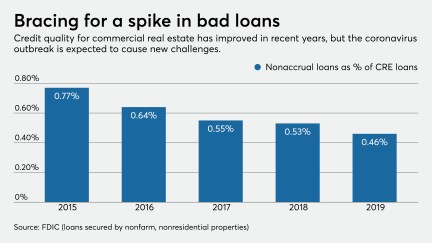
Commercial real estate lenders have to consider not only how they’ll weather the COVID-19 downturn, but whether worker and consumer habits have changed for good.
© 2026 Arizent. All rights reserved.

Commercial real estate lenders have to consider not only how they’ll weather the COVID-19 downturn, but whether worker and consumer habits have changed for good.
Some corporations are willing to oblige, turning instead to new, pricier term loans or revolving credit lines rather than tapping existing ones, industry officials say.

Direct lenders around the world are talking with borrowers about easing interest payments, waiving penalties and relaxing covenants as they assess the growing damage to their portfolios caused by the coronavirus pandemic.
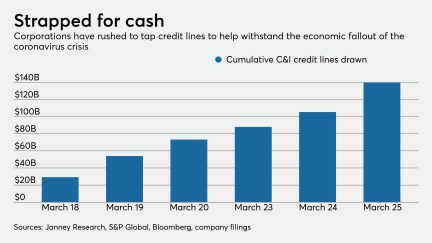
Draw-downs on C&I credit more than quadrupled in a seven-day period ended March 25. Lenders may try to rein them in if the crisis drags out, but legal precedent isn’t on their side.
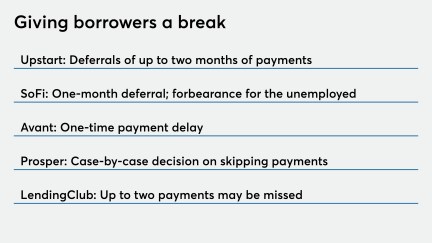
While LendingClub, Prosper, Avant and SoFi are giving existing borrowers breaks in the short term, they're considering tightening credit as the coronavirus outbreak threatens to drag the economy into a recession.
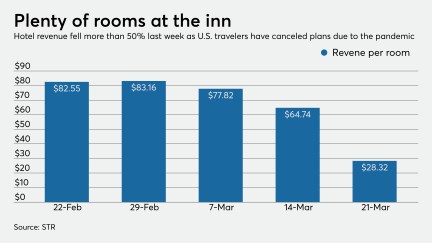
With seven in 10 rooms sitting empty amid the coronavirus outbreak, hotel and banking groups are urging policymakers to open up the Term Asset-Backed Securities Loan Facility.
The amount of distressed debt in the U.S. has quadrupled in less than a week to nearly $1 trillion, reaching levels not seen since 2008 as the collapse of oil prices and fallout from the coronavirus shutters entire industries across the globe.

Dramatic Fed intervention may steady some markets, but unless something changes — and, judging by the last two weeks, it very well could — the central bank won’t be there to save fallen angels. Which brave investors will step up?

Red flags and warning signs from February should have prompted investors to make “all the wise decisions" at that time, says Ville Talasmaki of Finnish financial group Sampo Oyj.
The Federal Reserve committed Monday to conducting more asset purchases of Treasury securities and mortgage-backed securities and announced $300 billion in new financing for credit facilities.

While collapsing market prices do not present immediate worries for CLO managers, the prospect of future downgrades and defaults becomes more problematic.

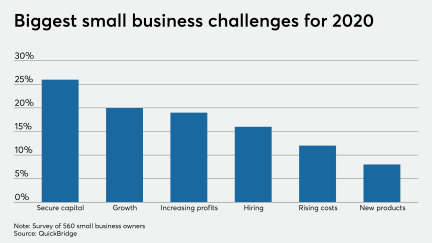
With small businesses feeling the financial scourge of the coronavirus, bridge loans could be the direction they turn to keep things afloat.
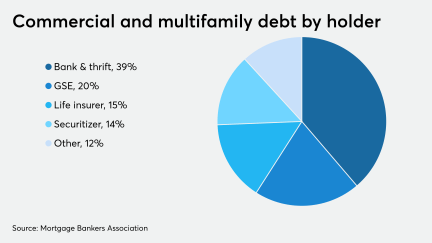
Add continued growth in commercial and multifamily mortgage debt outstanding to the list of things that the economic fallout from the coronavirus might affect.
Lenders are rallying around a bill from Sen. Rubio that would give them access to another $50 billion under the 7(a) program. It could face obstacles in the House, where a bill favors direct lending by the Small Business Administration.

Prices for major term loans issued by operators such as Marriott International, Hilton Worldwide and Caesars Entertainment have fallen in recent weeks as investors grow worried about the impact of the COVID-19 outbreak on global tourist and business travel.

Banks may be protected from a direct hit, but they have invested in vehicles that include such loans, potentially exposing them to defaults.
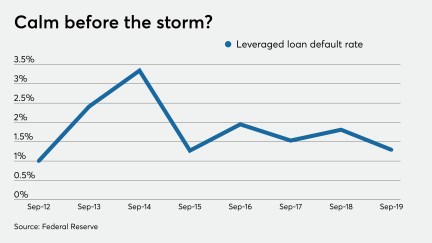
The falling rates continue a three-year trend of improving performance across numerous commercial mortgage sectors including multifamily, office and retail.

Exchange traded funds tracking leveraged-loan performance saw sharp declines on Monday, following a Friday leveraged loan index decline that was the steepest in nearly a decade.

If JPMorgan, Credit Suisse and Macquarie Group aren’t able to find enough takers of bonds and loans funding El Dorado Resorts' acquisition of Caesar's Entertainment, they may have little choice but to offer the debt at a steep discount.

Compliance, risk management and staffing will likely come under added scrutiny as regulators lay out a framework for future fintech-bank mergers.

Couldn’t load more articles. Try again.