Troubled Voxtur sells majority stake in Blue Water
Michigan-based University Bancorp is paying $30 million for a 50.5% stake in a business Voxtur acquired for $101 million in 2022.

© 2026 Arizent. All rights reserved.

Michigan-based University Bancorp is paying $30 million for a 50.5% stake in a business Voxtur acquired for $101 million in 2022.
Rohit Chopra, the director of the Consumer Financial Protection Bureau, has cautioned banks, credit unions and fintechs about fair-lending violations that may stem from reliance on artificial intelligence. His comments threaten to discourage financial firms from using the technology to crunch nontraditional data about borrowers, experts say.
Button Finance intends to use the capital to develop its underwriting platform and increase hiring.

The regulation of cryptocurrencies gains momentum abroad while a number of hurdles must be cleared before lenders and banks can handle them at scale in the U.S.

The mortgage real estate investment trust has been a first-mover regarding innovations in the private securitized market, and others tend to follow its lead.

The expansion of borrower data collected in the new URLA upends an industry standard and lenders are experiencing some growing pains.
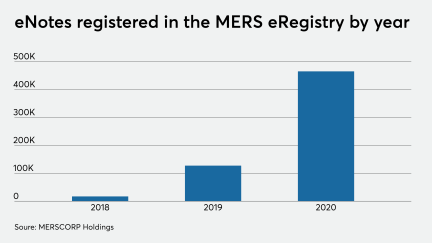
The transaction consisting of $24 million in securitized Ginnie pools followed a 265% jump in broader industry eNote registrations last year.
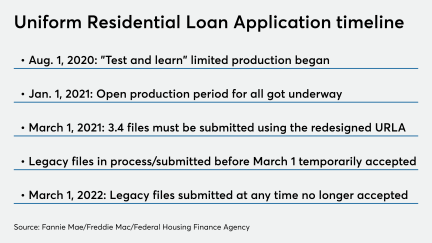
When the Uniform Residential Loan Application transition deadline hits on March 1, a data set within Fannie Mae’s Desktop Underwriter Program, which many lenders have used for a host of functions, will no longer be supported and unprepared lenders could later experience disruption.
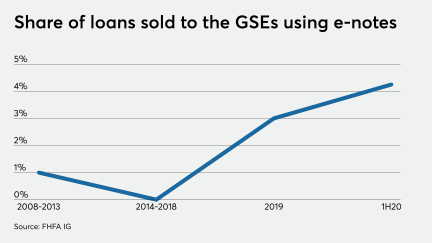
Electronic notes did come in handy this year given the mortgage industry's need to operate remotely, but they also increase the government-sponsored enterprises' responsibility for monitoring the risk of multiple counterparties.
The government-sponsored enterprise’s seller/servicer guide is now integrated into the online portal. Freddie also improved the readability of loan-level reporting it provides, and has further changes in the works.
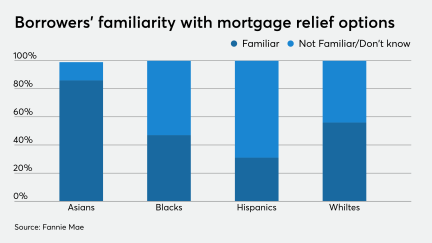
A survey conducted throughout the second quarter found knowledge gaps based on race and income.
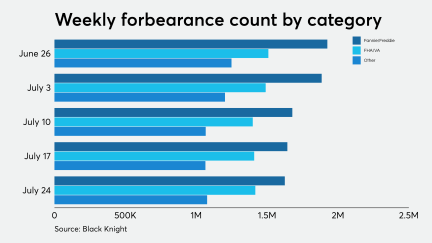
From guidelines for remote appraisal alternatives to the ways that forbearance affects borrowers' ability to get new loans, here are five examples of mortgage requirements that have been in flux since the coronavirus outbreak in the United States.
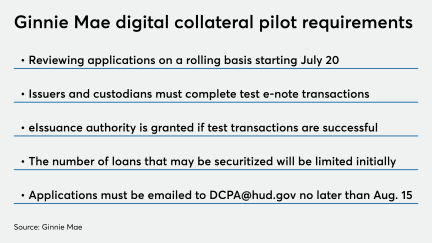
Issuers approved for the program will receive written authority to use "digital collateral" for a limited number of securitizations.
Lenders and servicers' biggest pandemic challenges revolve around clarity for loan eligibility and understanding options for their borrowers once the forbearance period ends.
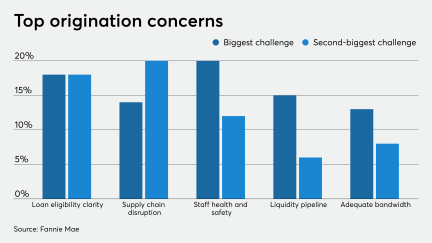
The other parts of the Day 1 Certainty program regarding income and asset verifications remain in effect.

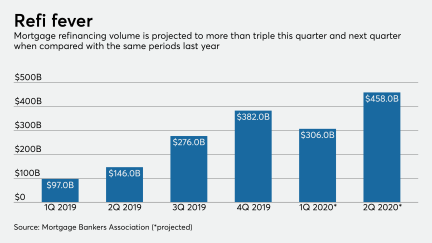
Refinancing activity is surging, existing borrowers are inquiring about loan modifications, loan closings are being delayed by more complex credit checks — and banks are short on people to handle it all.
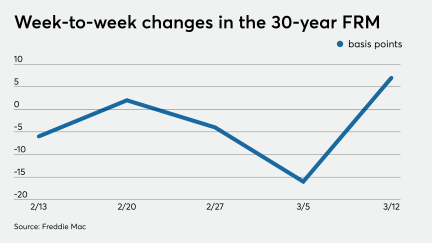
Not so long after Treasury bond yields experienced an unprecedented drop, the average 30-year mortgage rate rose, reflecting volatility related to the coronavirus as well as capacity issues on multiple levels.
Wealthfront will add third-party mortgages to its investing platform, while Varo Money says robo advice and mortgages are in its long-term plans.
In a recent interview, Plaza Home Mortgage CEO Kevin Parra discussed why he likes certain underutilized loan products, thinks online lending will be limited, and is bullish on third-party originations.

The former head of the Office of Federal Housing Enterprise Oversight explains why he thinks the mortgage industry is closer than ever to having a truly paperless process, and weighs in on GSE reform.

Couldn’t load more articles. Try again.