Mortgage rates rise on continuing economic turmoil
Jobs numbers, inflation data and the continued debate over raising the debt ceiling are factors applying upward pressure.
© 2026 Arizent. All rights reserved.

Jobs numbers, inflation data and the continued debate over raising the debt ceiling are factors applying upward pressure.
Meanwhile, the average purchase loan amount surged to its highest level in 2023, showing signs of continued demand amid limited inventory.

Conventional and government-backed purchases both increased last week, even with a 12 basis point surge in the 30-year conforming average, the Mortgage Bankers Association said.
Stronger than expected demand and home prices drove the latest forecast.

Mixed economic signals left mortgage rates flat over the past seven days, with experts suggesting the end of Federal Reserve policy hikes might be coming as well. The 30-year fixed rate mortgage averaged 6.27% for the weekly period ending April 13, down a single basis point from 6.28% seven days earlier, according to Freddie Mac’s […]

Lower mortgage rates during the early part of the month, along with fewer properties for sale helped to drive values higher.

However, the benchmark 10-year Treasury yield pushed back up 15 basis points from a week ago as the markets settle following the recent bank failures.

The year-over-year drop in January stemmed primarily from loans where a payment had not been made in at least 120 days but shorter-term arrears were higher during the same period.

The economic situation is more like what happened during the mid-'80s thrift crisis than the 2008 downturn, said Chief Economist Doug Duncan.

Both 30- and 15-year averages dropped for the first time in six weeks, as investors flocked to safety of 10-year Treasuries.

Buyer affordability has decreased by almost 22% in the past year, according to the Mortgage Bankers Association.
Persistent inflation concerns drove the 30-year average up 41 basis points this month.

But with rates turning back up this past week, activity could fall in February, Black Knight Optimal Blue said.

Since breaking above 7% in November, the 30-year fixed is now down nearly a full percentage point, Freddie Mac said.
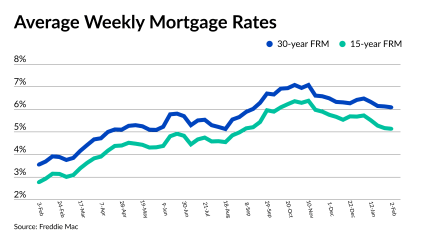
But several recent news developments are creating the perception that the risk of a recession is on the wane and that could end the downward pressure on rates.
The 30-year fixed rate surged 15 basis points from a week earlier but ends 2022 at more than twice its mark from a year ago.

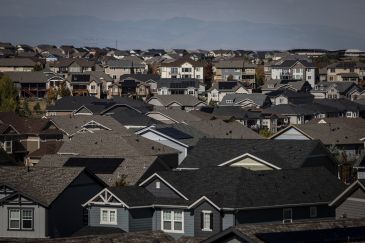
This year's rapid rise in mortgage rates is cooling the U.S. housing market, leading to sales declines and pressure on home prices. Other measures put the figures above 6%.

Both the 30- and 15-year averages are now more than 3 percentage points higher from their levels of one year ago.

Comments from Federal Reserve officials in Jackson Hole last week have markets bracing for further tightening of monetary policy in the near term.

Better-than-expected economic data helped lead to the steep acceleration of the 30-year average, while the 15-year also shot up.

Couldn’t load more articles. Try again.