Mortgage rates jump higher again after jobs, inflation news
Following their largest drop in over a decade one week ago, averages rapidly swung upward as recession talk receded.

© 2026 Arizent. All rights reserved.

Following their largest drop in over a decade one week ago, averages rapidly swung upward as recession talk receded.
Recent remarks from Federal Reserve Chair Powell suggest more upward movement is ahead.

The latest Federal Reserve move to combat inflation led to a weekly increase of more than 50 basis points.

Rising interest rates eliminated any refinance incentive for 30% of the loans analyzed by Standard & Poor's, marking a turnaround from the start of the year when prepay speeds were expected to increase

A positive employment report, robust consumer spending and Fed comments on inflation counter measures drove rates upward.

The inventory shortage is beginning to ease, while demand is slowing due to high prices and rising mortgage rates.

With anticipated Federal Reserve moves already factored in, inflation and jobs data could play a bigger role in driving movement over the near term.

Averages rose sharply across the board, as investors focus on the central bank's response to ongoing economic and geopolitical developments.

Executives speak on the uncertainty created by the Russia-Ukraine war and Federal Reserve announcements.

In addition to the Russia-Ukraine conflict, persistent inflationary pressures and expected monetary policy moves are contributing to volatility.

The effect of the conflict and upcoming Fed announcements have left much of the industry guessing about what happens next.

Strong economic data was countered by international political developments, sending the 30-year rate lower for the first time in a month.

Inflation data showing a 7.5% increase in consumer prices will likely lead to Federal Reserve moves that apply continued upward pressure.

The latest jobs and economic numbers pave the way for additional upward movement throughout 2022, analysts said.
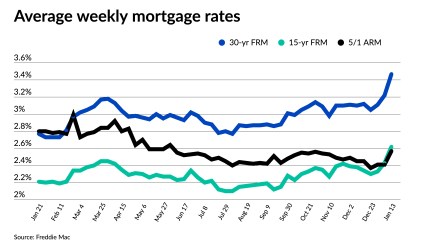
December's activity was down 18% from November, led by a 23% drop in purchase volume and a 17% decline in rate-and-term refinancings, Black Knight said.
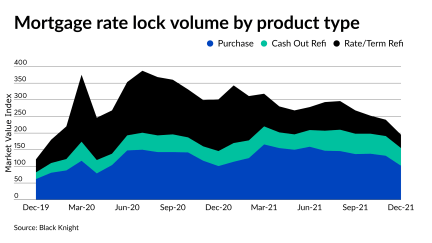
Despite the rising number of COVID infections, investors made no moves that would apply downward pressure.
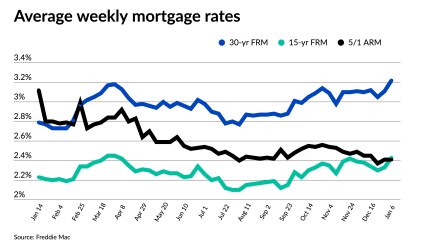
The central bank’s new tone has many in the industry planning for potential volatility in 2022.
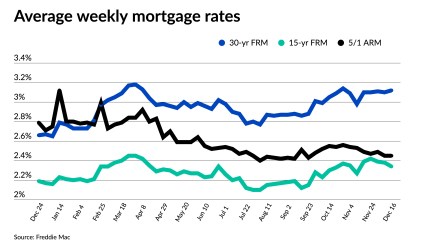
However, economic data points to likely future increases, with investors awaiting numbers from upcoming jobs report.
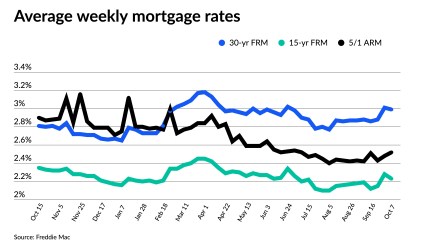
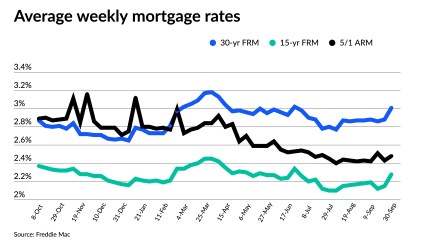
Taper announcement, slowing COVID cases help remove downward pressure, leading to increases across all loan-term types.
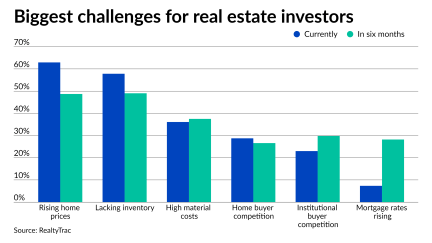
The home price increases and the ongoing inventory shortage made buying conditions difficult and many think it’s only getting more challenging, according to RealtyTrac.
Couldn’t load more articles. Try again.