Weekly Wrap: TALF funds largely absent from ABS dealmaking
Deals, trends and research in structured finance and asset-backed securities for the week of Sept. 4-10
By
Glen Fest

© 2026 Arizent. All rights reserved.

Deals, trends and research in structured finance and asset-backed securities for the week of Sept. 4-10
KKR & Co. is looking to grow its asset-based private lending business to capitalize on a retreat by banks and more traditional market participants in the wake of the coronavirus pandemic that has led to mis-priced risk.

The debut fund chose an unmistakable ticker (AAA) to market the relative safety of the CLO that is often unfairly attributed with the risks of the pre-crisis CDO.

A three-month drought in CRE CLO issuance came to an end this week with new deals from Exantas and A10 Capital.

Deals, trends and research in structured finance and asset-backed securities for the week of Aug. 28-Sept.3

More than 2,500 Fitch-rated structured finance transactions face significant challenges transitioning from Libor to an alternative floating-rate benchmark, but the ratings agency doesn’t foresee that resulting in potential ratings downgrades until 2022.

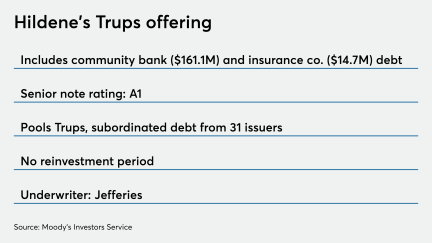
The class A notes, secured by legacy trust-preferreds and subordinated debt of institutions, carry an investment-grade A1 rating from Moody's. That rating is slightly lower than a prior Hildene CDO, due to elevated pandemic risk to bank profitability.
The worst recession since the Great Depression is prompting indebted companies to default, and increasingly more will do so in a way that’s harder for investors to detect.

First, J. Crew. Now Neiman Marcus. Flashing red: J.C. Penney, Hertz and many more. The coronavirus has crushed the life out of some venerable household names.

Of 900 deals reporting data over the last month, 21% have narrowed or eliminated payments to the equity. Some analysts expect about one in three deals will eventually limit payments to their riskiest securities.

Apollo Global Management Inc. faces the prospect of having to hand back earlier profits from several of its funds as its holdings were hit hard by the economic fallout from the coronavirus pandemic.

The U.S. leveraged loan market is springing back to life with new deals for T-Mobile US Inc. and Delta Air Lines on deck for investors willing to take on risk.
Rising default levels have produced strain on many collateralized loan obligations, many of which are now approaching breaches of covenant tests on minimum weighted-average ratings factors and maximum holdings of triple-C rated loan assets.
The Distressed Credit Opportunities Fund III money pool, dubbed Disco III, will target leveraged loans, high-yield bonds and collateralized loan obligations.

Moody’s Investors Service has placed hundreds of non-senior U.S. CLO tranches under review for downgrade, affecting 358 broadly syndicated loan-backed portfolios as Moody’s measures the ongoing economic shocks of the coronavirus outbreak.

Bank research reports note the loans will only apply to purchases of CLO notes backed by newly issued leveraged loans. Most recently launched deals involve warehoused or distressed secondary-market loans ineligible for TALF.

Fitch expects a majority of European CLO junior notes to be placed on a potential downgrade watch due to enhanced evaluation for coronavirus-related stresses.

Hedge funds are making headlines daily with plans to capitalize on this rapid shift in the outlook, contending the market presents a once-in-a-lifetime opportunity

Dramatic Fed intervention may steady some markets, but unless something changes — and, judging by the last two weeks, it very well could — the central bank won’t be there to save fallen angels. Which brave investors will step up?

One option could be issuing an announcement that makes clear regulators won’t likely object to risky funding arrangements that they’ve previously frowned upon, said the person who requested anonymity because the discussions might not lead to any actions.

Couldn’t load more articles. Try again.