
Futures mixed as U.S. nears Russia oil-import ban: markets wrap
Energy prices are complicating the task for policy makers, who face a delicate balancing act in tightening to curb inflation without killing the economic recovery.

Energy prices are complicating the task for policy makers, who face a delicate balancing act in tightening to curb inflation without killing the economic recovery.
A sustained jump in crude increases the prospect of a global recession and a return to the stagflation seen in the 1970s, where inflation runs hot but there’s no underlying economic growth.

The gains come even as the crisis spurred by Russia’s invasion of Ukraine threatens disrupt the supply of oil, natural gas and other key commodities, further fanning record high inflation expectations.

Recent existing home sales have been stronger than expected, but next year could see a market held back by the inventory shortage and higher rates.

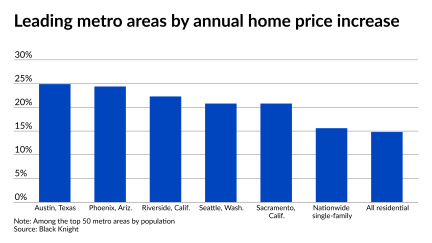
Similarities between the current rate of appreciation and what took place between 2004 and 2006 are mitigated by changes in the housing market.
Though unlikely to derail a hot housing market, another surge in COVID-19 cases could cloud the outlook for economic growth, analysts said.

Bond traders’ expectations for how fast inflation will rise over the coming five years have topped 3% for the first time on record.

Market-implied expectations for U.S. inflation for the next half-decade surged to the highest in 15 years amid the latest increase in commodity prices.

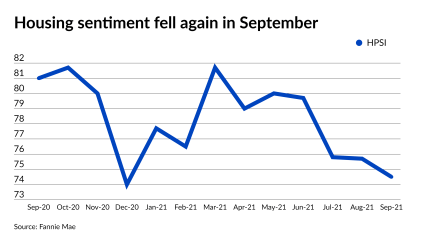
The share of borrowers who thought it was a good time to buy hit an all-time low, according to Fannie Mae.
The car maker is refinancing three revolving credit facilities using the Secured Overnight Financing Rate, and embedding climate-change goals into the deals.

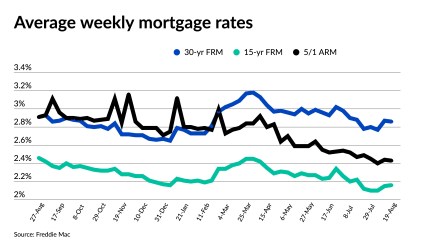
Meanwhile, investors await word from the central bank regarding monetary policy, as limited housing supply continues to drive prices upward.
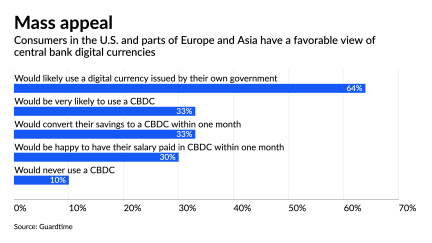
The regulation of cryptocurrencies gains momentum abroad while a number of hurdles must be cleared before lenders and banks can handle them at scale in the U.S.

Western central banks trying to develop sovereign cryptocurrency models face pushback from lawmakers and other obstacles, while the digital yuan has a much clearer path.
Home prices grew at a record annual pace in April but indicators of a possible slowdown popped up in May, Redfin noted.
Federal Reserve Vice Chair Randal Quarles has made it clear that banks failing to make the transition away from the benchmark rate could face supervisory consequences.
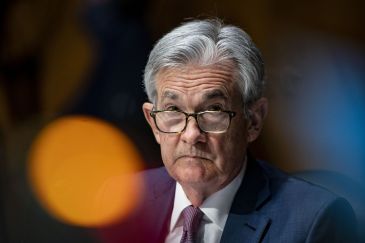
Federal Reserve Chair Jerome Powell is dismissing claims that loose monetary policy has led to rising home values and shrinking inventory and insists that the market is buoyed by creditworthy borrowers and investors.
The modifiable templates are a follow-up to a similar notification the organization created in 2019 for lender use.
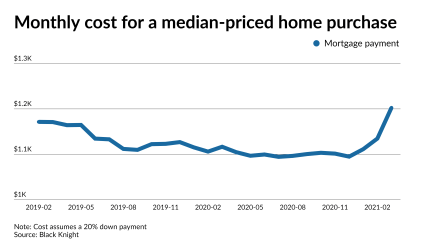
The increase won’t hurt the incentive for the average home shopper, but it means those who were looking to “buy the dip” in prices amid the pandemic may have missed their chance.
Starting Thursday, firms should stop issuing new loans, bonds and securitizations tied to the discredited benchmark, according to the Bank of England.

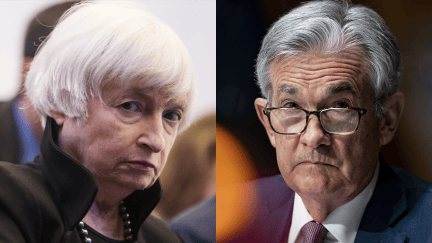
The heads of the Federal Reserve and Treasury are urging passage of legislation that would replace Libor with the Secured Overnight Financing Rate in certain contracts. That would spare banks litigation over trillions of dollars of contracts when Libor expires in 2023.
Couldn’t load more articles. Try again.