Weekly Wrap: Subprime card issuer breaks ice on 2021 credit-card ABS
Deals, trends and research in structured finance and asset-backed securities for the week of Feb. 26-March 4
By
Glen Fest

© 2026 Arizent. All rights reserved.

Deals, trends and research in structured finance and asset-backed securities for the week of Feb. 26-March 4
The Federal Reserve is intensifying its scrutiny of banks' efforts to shed their reliance on the London interbank offered rate, and has begun compiling more detailed evidence on their progress, according to multiple people with knowledge of the matter.

Most major global banks will spend more than $100 million each this year preparing for the end of the discredited Libor rate, according to Ernst & Young.

Some of the world’s biggest banks are urging a U.S. judge not to immediately terminate Libor after a group of borrowers filed suit claiming the benchmark was the work of a “price-fixing cartel.”
The likely extension of support of Libor until June 30, 2023 is a major plus for the securitization market, fending off potential market disruption the buying and trading of $1.8 trillion in outstanding asset-backed securities because of the planned cessation of the benchmark rate by the end of 2021.

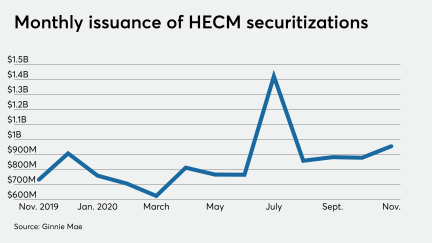
The deadline for inclusion in Ginnie mortgage-backed securities has been extended and an exception will be made for some participations.
The move would alleviate near-term risks and potential disruption with legacy securitization and structured-finance portfolios should all key Libor rates cease publication after 2021, as originally planned.

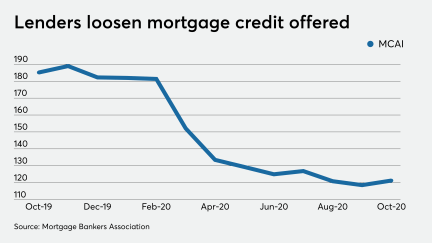
Lenders also increased jumbo product availability as well as rolling out new SOFR-indexed ARMs.
The statement comes after multiple small and midsize institutions earlier this year warned the agencies that the secured overnight financing rate was ill-suited to them.
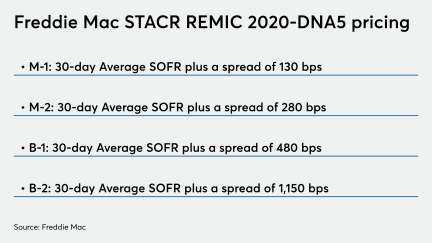
While using the 30-day SOFR as its index, Freddie Mac structured the deal so it could shift to a one-month term if and when that rate is approved.
A New York-state proposal to shift trillions of dollars in securities contracts from Libor- to SOFR-based benchmarks is gathering dust. That worries bankers and investors on on how to proceed with the next steps toward a replacement rate as Libor's post-2021 expiration grows nearer.

Lenders risk litigation and fines for misconduct if clients say they hadn’t fully understood the consequences of a shift to a replacement benchmark after the London interbank offered rate expires at the end of 2021, Moody's said.
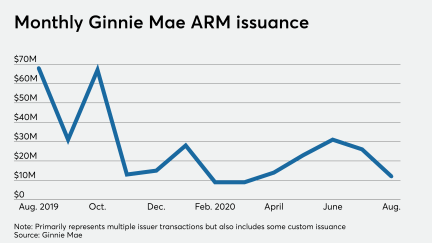
The restrictions on the pooling of loans with any interest term based on Libor will be effective for traditional mortgage-backed securities issued starting Jan. 21, 2021, and earlier for reverse-mortgage securitizations.
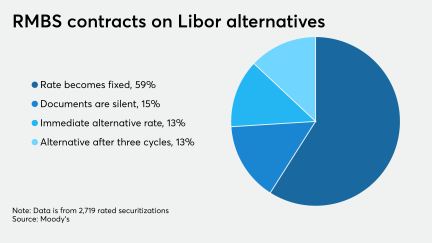
Bondholders could see principal losses if, due to the way the documents are worded, the rate is frozen at the last published amount.
This proposed Libor replacement is an imaginary, backward-looking benchmark dreamed up by the economists at the Fed with no discernible market.
As the discredited Libor interest rate benchmark enters its last months, some banks are turning away from the repo-based alternative that regulators prefer. What could go wrong?

More than 2,500 Fitch-rated structured finance transactions face significant challenges transitioning from Libor to an alternative floating-rate benchmark, but the ratings agency doesn’t foresee that resulting in potential ratings downgrades until 2022.

Newly published conventions from an industry-led benchmark replacement study group could spark adoption of more built-in rate transition plans into loan documents.

The mortgage insurer is receiving $528 million of coverage in the event of defaults in a $44 billion loan pool.
The Consumer Financial Protection Bureau seeks to address challenged posed by the sunset of the London interbank offered rate at the end of 2021.
Couldn’t load more articles. Try again.