CFPB gives mortgage servicers relief to help struggling homeowners
A new CFPB rule will expedite the forbearance and loss-mitigation process for consumers suffering financial hardship from the pandemic.

© 2026 Arizent. All rights reserved.

A new CFPB rule will expedite the forbearance and loss-mitigation process for consumers suffering financial hardship from the pandemic.
Compared with the week prior, approximately 57,000 fewer loans from all investor types were forborne.
New Residential Investment Corp., fresh off a substantial first-quarter reduction of its asset holdings, is now planning to securitize the receivables on its $200 billion servicing portfolio of Fannie Mae-owned mortgages.

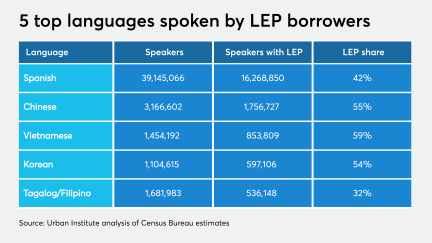
The language most frequently spoken by LEP consumers is Spanish, followed by Chinese, Vietnamese, Korean and Tagalog. The Federal Housing Finance Agency's online clearinghouse translates CARES Act forbearance information into these languages.
The Fed chairman updated senators about the agency's new credit facility for midsize firms struggling in the pandemic. He also left open the possibility of additional stress tests to gauge the industry’s coronavirus response.

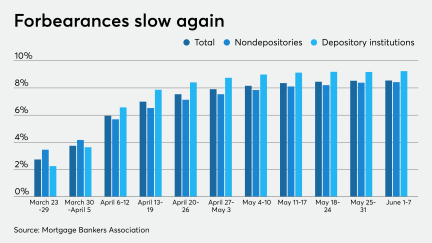
The number of loans going into coronavirus-related forbearance ground down to a growth rate of 2 basis points between June 1 and June 7, according to the Mortgage Bankers Association.
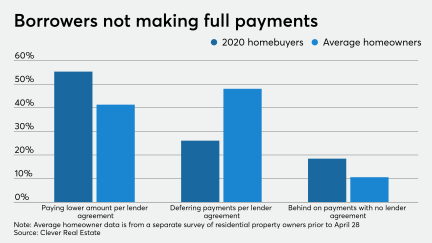
A Clever Real Estate survey found a significant share of new borrowers are not making their full payment.
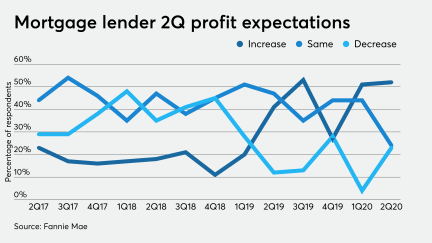
The expected rise in refinance volume overrides pessimism about purchase activity for their businesses.
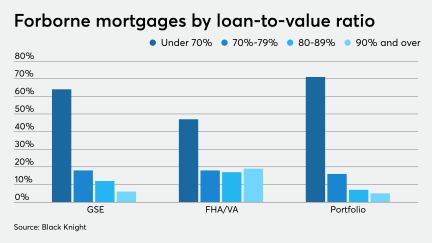
About 9% of government-insured loans in forbearance have low equity, which could hamper post-forbearance servicing.
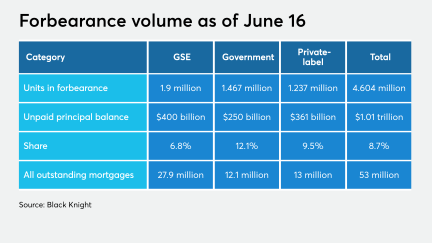
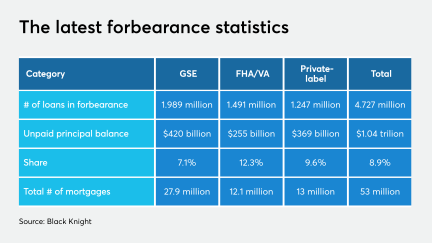
But there was an increase in private-label mortgages in forbearance.
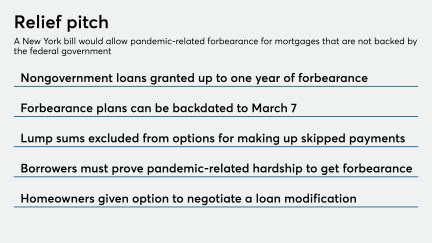
One criticism of the CARES Act is that it provides relief only to borrowers with government-backed loans. Bills in New York and California would cover the remaining 30% of homeowners.
With no way of knowing just how many borrowers will need the mods after the coronavirus forbearance period ends, lenders are deploying artificial intelligence and servicing protocols to tame the ferocious piles of paperwork awaiting them.
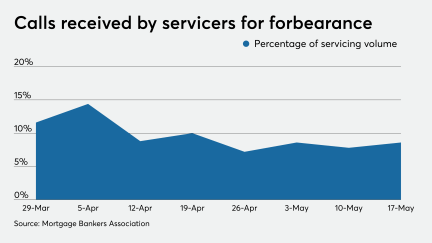
Aggregate numbers for coronavirus-related payment suspensions are showing more consistency as organizations clarify how they handle them, and some consumers' incentives to use them may be declining.
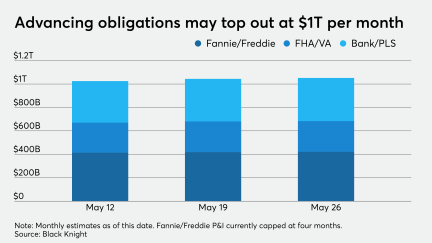
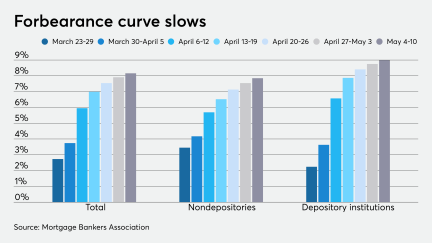
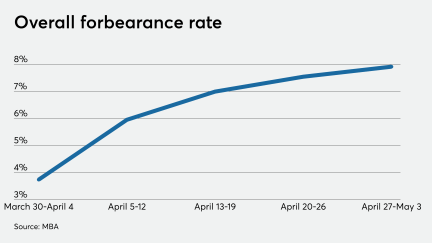
Forecasts about the pandemic's impact on the mortgage market have grown less dire after forbearance requests by homeowners nearly leveled off in the first half of May.
The templates are meant to make it easier to obtain agency approval for small-dollar loan products and to accommodate mortgage servicers that want to provide online loss mitigation options.

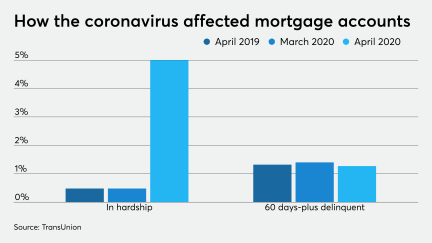
Loans with coronavirus-related forbearance have to be reported as current to the credit bureaus but there’s a ripple effect from them that has implications for credit reports and underwriting.
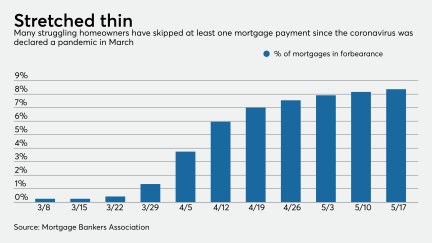
Total forbearance driven by the coronavirus rose by 25 basis points, which suggests it is still growing but at a slowing pace, according to the Mortgage Bankers Association.
Ginnie Mae is offering temporary relief related to its acceptable delinquency-rate threshold in response to issuers' need to fulfill the forbearance requirements in the coronavirus rescue package.
The central bank's Financial Stability Report said companies may face difficulties repaying debt given lower earnings, “which could trigger a sizable increase in firm defaults."
J.C. Penney Co., the department-store chain that’s been negotiating with creditors on a plan to restructure in bankruptcy court, made good on a missing loan payment and said it’s still considering solutions to its crushing debt load. The company paid about $17 million of interest that was due May 7 on its senior secured term […]
Couldn’t load more articles. Try again.