Fed’s Waller needs to see inflation improve before supporting a cut
Higher energy and commodity prices are intensifying headline inflation, which means inflation is headed is not headed in the right direction.

© 2026 Arizent. All rights reserved.

Higher energy and commodity prices are intensifying headline inflation, which means inflation is headed is not headed in the right direction.
The 30-year rate increased six basis points to 5.18% on Tuesday, a level last seen on the brink of the global financial crisis in 2007, rising alongside US government yields across maturities.

Employers hired an additional 115,000 workers in April, while unemployment remained unchanged at 4.3%. Despite the positive headline figure, a spike in newly unemployed workers and a rising number of underemployed workers suggests instability under the surface.

Warsh won the race for Fed chair partly through sketching out a road map to rate cuts on the premise that an AI-driven productivity boom would keep inflation low.

The Federal Open Market Committee's April meeting — likely Federal Reserve Chair Jerome Powell's last — is unanimously expected to keep interest rates steady, but questions about energy, inflation and the upcoming transition in leadership still loom.
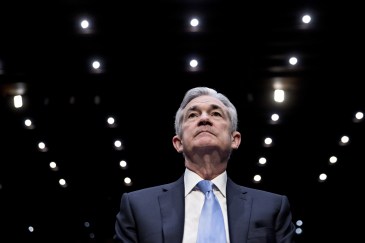
In testimony Tuesday, Warsh avoided answering questions about the near-term path of interest rates, further supporting the market's wait-and-see stance.

Wells Fargo CEO Charlie Scharf said bankers and economists are broadly against lowering interest rates now, given uncertainty from the Iran war.
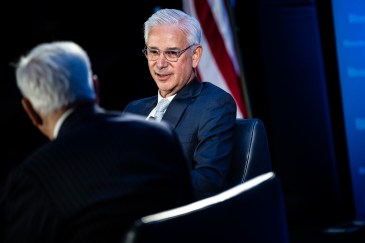
Federal Reserve Gov. Stephen Miran Thursday said that the Iran war and tariffs will not have long-term impacts on inflation, but did say he is reconsidering his rate cut outlook for the year.

Half of Gen Z homeowners and 44% of millennial homeowners were at risk of missing at least one mortgage payment over the last two years, ServiceLink found.
The setback pared a weekly gain for US government bonds sparked by an April 8 ceasefire agreement, which caused oil prices to tumble from near multiyear highs.
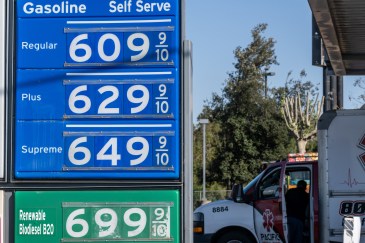
A 21.2% spike in the price of gasoline was the biggest contributor to a 0.9% increase in the Consumer Price Index in March, according to a Friday report from the Bureau of Labor Statistics. The agency said other price increases were largely contained.
Treasuries and gilts especially reflect unrealistic expectations that inflationary pressures will goad central banks into another 2022-style rate-hiking cycle.

Federal Reserve Chair Jerome Powell said the central bank is cautiously monitoring consumer sentiment as tensions from the Iran war push energy prices higher, complicating efforts to bring inflation down to the Fed's target.
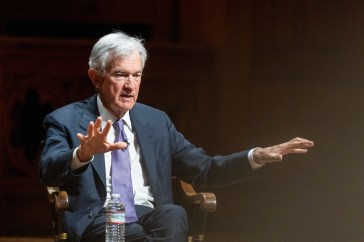
Two former members of the Federal Open Market Committee said in interviews that they expect the Federal Reserve to keep rates steady amid uncertainty over the ongoing war with Iran and the resulting upward pressure on inflation.
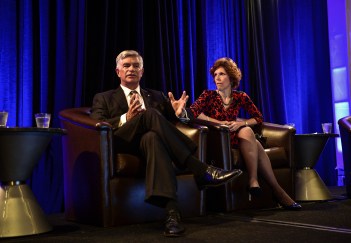
While the biggest amount of unwinds occurred on March 2, the new positions added since then have broadly signaled short positions, targeting higher Treasury yields.

Federal Reserve Gov. Stephen Miran said it is too early to judge how U.S. involvement in the war with Iran will affect inflation and monetary policy.
Since the meeting, investors have rushed to price in higher rates as inflation fears have built in financial markets, though Treasuries rallied Monday after President Donald Trump said he would postpone strikes on Iranian energy infrastructure.

The Fed, European Central Bank and the Bank of England all held rates this week as policymakers grapple with the uncertain outlook for inflation and growth arising from the conflict in the Middle East.
Federal Reserve Chair Jerome Powell, in a post-FOMC meeting Wednesday, said he intends to stay at his post until a successor has been confirmed, adding that he will remain on the Fed board until a Justice Department investigation into him is concluded.
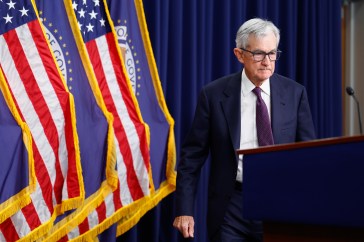
The Federal Open Market Committee is widely expected to keep interest rates steady when it concludes its regular meeting tomorrow, but rising uncertainty about inflation in the wake of the Iran war is clouding the monetary policy outlook.
Couldn’t load more articles. Try again.