Treasuries slump as hot inflation lifts Fed rate-hike bets
Traders priced in a roughly coin-toss probability that the U.S. central bank boosts rates at its October meeting after consumer prices advanced at the fastest pace in five months.

© 2026 Arizent. All rights reserved.

Traders priced in a roughly coin-toss probability that the U.S. central bank boosts rates at its October meeting after consumer prices advanced at the fastest pace in five months.
Treasuries rose on Friday after the US added fewer jobs than expected in September and unemployment edged higher, pushing the yield on two-year notes lower by as much as 10 basis points to 4.69%.

The economy added just 29,000 jobs in September, far below economists expectations, though the unemployment rate remained steady, indicating softening in the labor market.

The Bureau of Labor Statistics report showed the labor force continued to expand but at a weaker rate than in recent months. The development weakens the case for a near-term rate hike.
Beyond developments in the Middle East, a big focus will be Friday's release of monthly employment figures, which are projected to show the labor market remained resilient in May.

Employers hired an additional 115,000 workers in April, while unemployment remained unchanged at 4.3%. Despite the positive headline figure, a spike in newly unemployed workers and a rising number of underemployed workers suggests instability under the surface.

Yields in Europe and the US climbed across maturities, with those on two-year US Treasuries — especially sensitive to expectations for Fed policy — higher by 11 basis points to 3.89%.

Traders are now pricing in the Fed's next rate reduction in July, after the term of current Chair Jerome Powell ends in May.

The Bureau of Labor Statistics issued its delayed January employment report Wednesday morning, showing the economy added 130,000 jobs in January. But the agency also sharply revised its estimates for total jobs created in 2025 to 181,000 from 584,000.
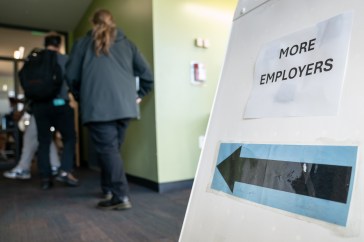
Investors have turned to private readings such as the Challenger, Gray & Christmas Inc. report showing companies announced the most job cuts for any October in over 20 years.

Traders are shifting their focus to Friday's release of the consumer price index, the first real glimpse on the state of the economy since the start of the US government shutdown.

While the shutdown has delayed the release of federally-compiled statistics, economists at Citigroup Inc. and Goldman Sachs Group said state-level data suggested initial jobless claims increased last week.

But even if global financial crisis 2.0 doesn't come, investors may well be in for a rough ride in the coming months as frothy financial markets come to terms with a cyclical slowdown.

The yield on US 10-year debt edged two basis point higher to 4.04% after falling to a five-month low Thursday, but still remained on course for a fourth week of declines.

In SOFR options, which closely track the Fed's policy path, a number of large positions have emerged that look to benefit from an outsized cut of 50 basis points at next week's meeting.

The attention will now turn to reports on producer prices and consumer prices, due Wednesday and Thursday, for signals of how quickly the Federal Reserve will lower borrowing costs.

Traders were watching a slew of data on a bigger-than-expected increased in jobless claims and expanded manufacturing Thursday.

Oneok plans to sell three-part, dollar-denominated senior unsecured notes while BMW is looking to price dollar-denominated debt in a four-tranche offering.

Interest-rate swaps showed traders now see a roughly 70% chance of a quarter-point rate cut by September. Fewer than two rate cuts are fully priced in for the year.

The labor market continues to cool gradually, a sign that businesses facing heightened uncertainty and turmoil didn't significantly alter their hiring plans.

Couldn’t load more articles. Try again.