4 questions as CFPB closes in on revamp of key mortgage rule
The agency is sending a strong message that it won’t rush to end an exemption for Fannie Mae and Freddie Mac while also signaling longer-term changes that will affect all lenders.

© 2026 Arizent. All rights reserved.

The agency is sending a strong message that it won’t rush to end an exemption for Fannie Mae and Freddie Mac while also signaling longer-term changes that will affect all lenders.
The FHFA’s attempt to move some of its balance sheet into the private sector could leave investors with greater liabilities than they were initially told.
Mortgage rates ended the week little changed from the previous seven-day period and near historic lows for the year, according to Freddie Mac.

More than half of the third quarter refinance activity was the cash-out variety, with borrowers removing the most total equity from their homes in nearly 12 years, according to Black Knight.
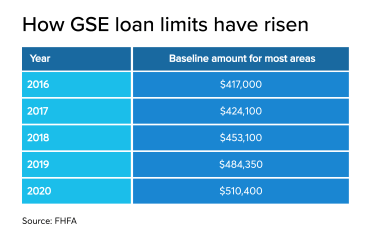
Loan limits for most mortgages Fannie Mae and Freddie Mac buy will exceed $500,000 for the first time ever next year, and the maximum for most high-cost areas will be $765,000.
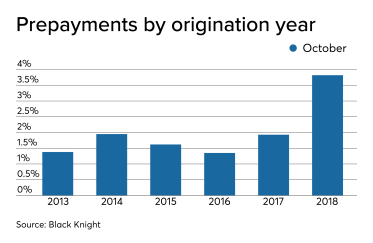
From product-specific variations in refinancing rates to pockets of depreciation in an otherwise healthy market, here are some details in housing-related data that highlight important underlying trends in the mortgage business.

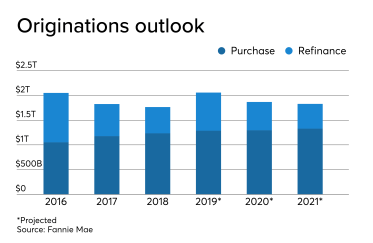
With economic expansion expected to keep churning through at least the first half of next year, Fannie Mae upwardly revised its single-family mortgage origination outlook for 2019 and 2020.
A proposal by a single utility threatens to upend California’s sweeping mandate requiring solar panels on almost every new home.

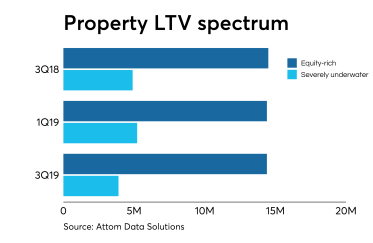
The share of severely underwater mortgages shrunk by over two percentage points compared with a year ago, as these borrowers benefited from the rise in equity levels, Attom Data Solutions said.
Freddie Mac is now forecasting back-to-back years of $2 trillion in mortgage loan originations rather than a drop-off in 2020.
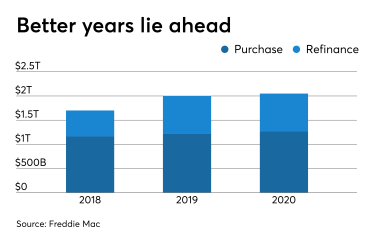
As lawmakers tackle Fannie Mae and Freddie Mac, any revamp must lessen risk to the mortgage system and U.S. taxpayers.
The end of the qualified mortgage patch should further accelerate non-QM origination growth, but is the mortgage industry ready?
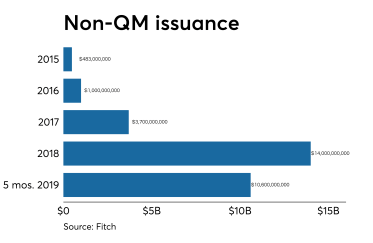
With the qualified mortgage patch expiring and a recession likely, wealth inequities that have hurt black and millennial homeownership could worsen, according to the National Association of Real Estate Brokers.
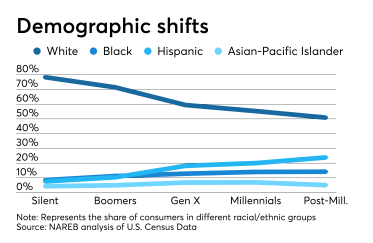
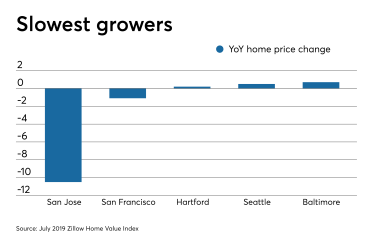
Property values recovered, and in some cases even surpassed housing bubble peaks, but the same can't be said for waning new construction activity, which won't return to historic norms for years, according to Zillow.
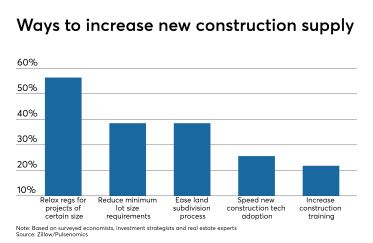
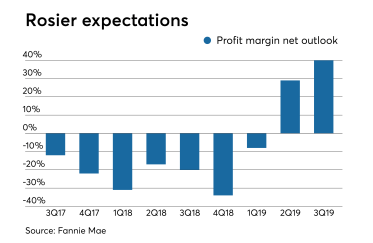
A swell of refinance demand amid a low mortgage rate environment pushed lender profit margin outlooks to the highest level since the first quarter of 2015, according to Fannie Mae.
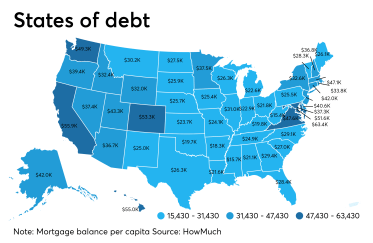
Mortgage debt climbed to a new peak of $9.4 trillion in the second quarter and the distribution across the U.S. varies greatly.
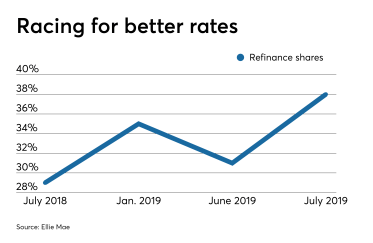
Refinances jumped in July in response to a considerable mortgage rate decline from the month prior as homeowners set to lock in lower costs, according to Ellie Mae.
Complaints made by legacy shareholders of Freddie Mac have no value after the Treasury Department pumped up Freddie and Fannie Mae through conservatorship.
While talks of an impending recession pick up steam, the housing market remains fairly stalwart and won't be to blame this time around, according to Zillow.
Lower rates will likely sustain higher levels of origination through at least the third quarter, but supply constraints and economic weakness could limit the purchase market's response in the long term.
Couldn’t load more articles. Try again.