
Prime jumbo mortgage lending by nonbanks set to grow in 2021
Upcoming changes to underwriting regulations, as well as the end of the QM patch, in addition to growing home values, all add up for this market to have a good year.
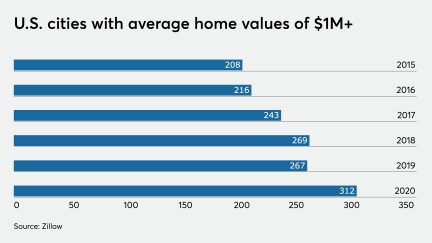
Upcoming changes to underwriting regulations, as well as the end of the QM patch, in addition to growing home values, all add up for this market to have a good year.
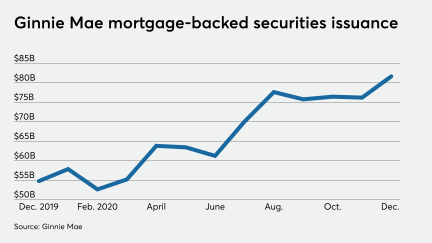
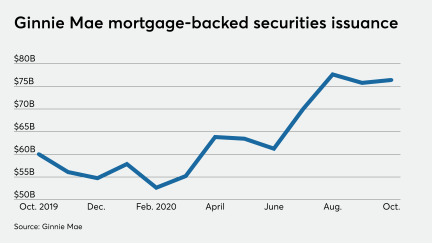
The volume of Ginnie securities issued in December marked the first time more than $80 billion has been issued in a month.
The buyout industry has about $3 trillion of unrealized value on its books, according to Preqin. And it’s tapping that to land loans for bolt-on deals, to refinance debt or bail out struggling companies in their portfolios.
Industry watchers make their wildest guesses (more or less) about developments in real estate finance that could rock the industry in the upcoming months.

The availability of financing hasn’t been an issue to date, but it still could be.
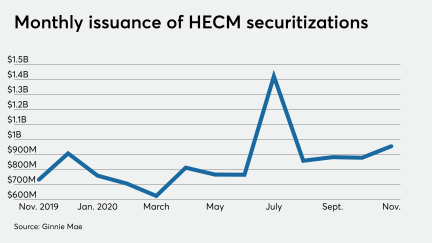
The deadline for inclusion in Ginnie mortgage-backed securities has been extended and an exception will be made for some participations.
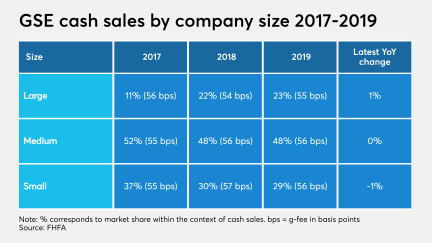
Last year, smaller lenders were put at a slight disadvantage in terms of what they were charged in guarantee fees when they sold loans for cash.
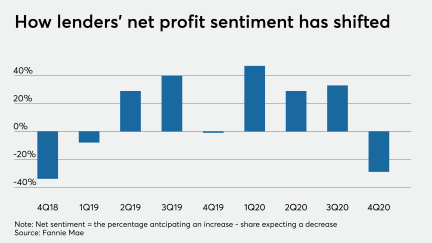
The average per-loan profit margin remains incredibly strong, but the share of senior executives expecting it to fall has risen markedly.
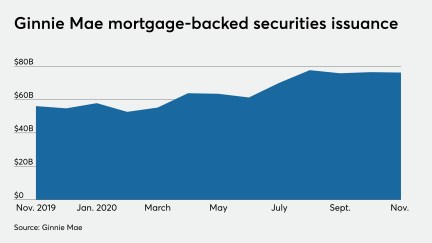
Whether Ginnie issuance increases in the future may depend in part on the extent to which the Biden administration wishes to tap the FHA to promote affordable housing and homeownership.
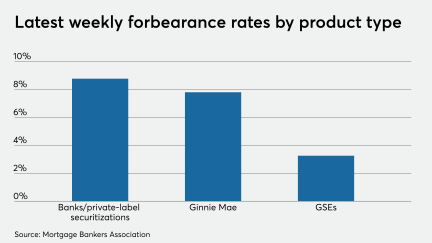
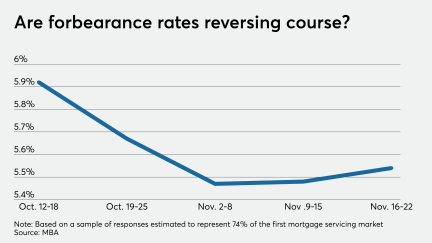
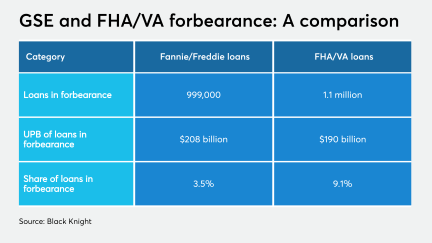
Even government-sponsored enterprise loans, which have seen forbearance rates drop for 24 weeks in a row, saw a slight uptick.
York Capital Management told its investors this week that it was all but getting out of the hedge-fund business to focus on its $8.5 billion in longer-term products.

The Structured Finance Association fears Treasury Secretary Steven Mnuchin may release the government-sponsored enterprises from conservatorship ahead of the change in administration, and that doing so could disrupt the mortgage-backed securities market.

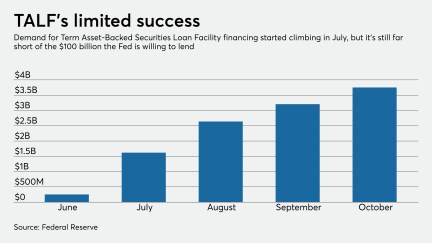
The Term Asset-Backed Securities Loan Facility was brought back to inject $100 billion into the pandemic-battered economy, but only a fraction has been disbursed. Yet experts, pointing to its calming effects on markets, recommend that it be extended into next year.
Lenders also increased jumbo product availability as well as rolling out new SOFR-indexed ARMs.
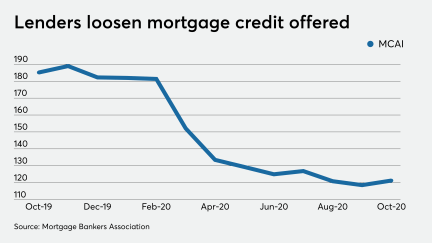
There have been several extensions of the policy since it was put into place as a way to sustain originations amid a wave of forbearance allocated to borrowers with government-related loans.
Freddie Mac representatives would not comment on the sudden resignation of Brickman. Interim CEO Michael Hutchins has served as Freddie’s executive vice president of investments and capital markets since January 2015.

The sector’s leaders are hoping for better in 2021, while not forgetting lessons learned about the market’s risks in 2020.
FHA volumes, a key contributor to Ginnie Mae issuance, could fall as long as the refinancing boom continues — unless the FHA takes a step that could reverse that trend.
Private equity managers and their investors, who were concerned about progressive plans to increase taxes and regulation on their industry, are relieved the expected “blue wave” scenario that would have handed Democrats control of the presidency and both chambers of Congress now looks unlikely.

If days go by without a clear result, the uncertainty could lead to market volatility, put off talks for a stimulus plan and complicate bankers' planning for a potentially new regulatory environment.

Couldn’t load more articles. Try again.